A plain roasted espresso bean has roughly 1.5 to 3 mg of caffeine. A chocolate-covered espresso bean usually has more, commonly cited at 6 to 13 mg, depending on the brand. That gap explains why so many numbers online disagree.
This guide shows where the caffeine comes from and how many beans equal a shot of espresso. It also covers how many you can eat before you pass the 400 mg daily limit for most adults.
Are espresso beans different from coffee beans?
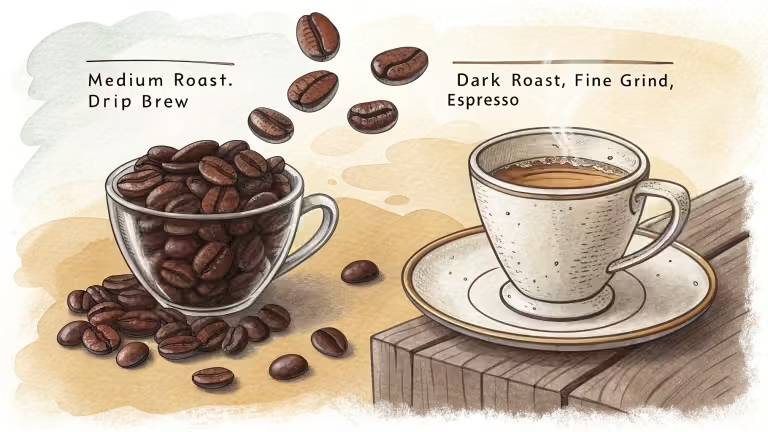
No. “Espresso beans” is a label for how the beans are roasted and meant to be used, not a different plant. Any coffee bean can be ground fine and pulled as espresso. Roasters usually sell darker blends under that name.
So the caffeine in espresso beans depends on the same things as any coffee bean: the species, the bean size and how much you eat. Roast level has little effect on caffeine when you compare equal weights.
How much caffeine is in one plain espresso bean?
Most estimates start with caffeine per gram of roasted coffee. Arabica typically holds about 10 to 12 mg per gram, and one gram is roughly seven beans, according to Caffeine Informer. That works out to about 1.5 to 2 mg per bean, and a larger bean pushes it toward 3 mg.
You may see “6 mg per bean” on other sites. That number is hard to square with the math for a normal arabica bean, so treat it as a high-end claim. Beans vary in size and no two bags are identical, so every per-bean figure is an estimate.
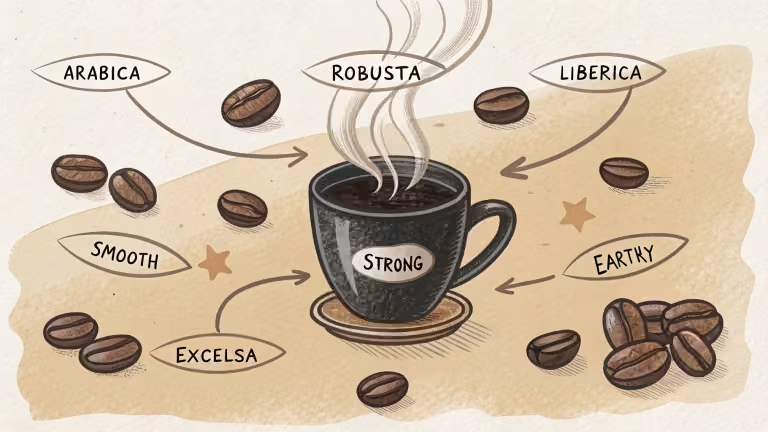
Robusta is different. It generally contains close to twice the caffeine of arabica. A robusta-heavy espresso blend will therefore give you more per bean. Check the bag to see which species you have.
How much caffeine is in chocolate-covered espresso beans?
This is the bigger source of confusion. The bean is only part of the candy. The chocolate coating adds weight and a small amount of caffeine of its own. Dark chocolate has more than milk chocolate, and white chocolate has none.
Published per-bean numbers range widely:
Use the brand’s label if it lists caffeine. If it doesn’t, plan around the middle of the range and expect some variation.
Plain vs. coated: a quick comparison
| Type | Approx. caffeine per piece | Notes |
|---|---|---|
| Plain roasted arabica bean | About 1.5–3 mg | Estimated from caffeine per gram and bean size |
| Plain robusta bean | Higher than arabica, often close to double | Varies by blend |
| Chocolate-covered espresso bean | About 6–13 mg | Bean plus chocolate; varies by brand |
How many espresso beans equal a shot of espresso?
A single shot of espresso usually contains somewhere around 60 to 75 mg of caffeine. Here is how that compares to eating the beans.
Eating whole beans also differs from drinking espresso. Brewing extracts only part of the caffeine in the grounds. When you chew and swallow the whole bean, you take in all of it. A shot made from 18 grams of beans can contain less caffeine than those same 18 grams eaten whole.
How many espresso beans are too many?
For most healthy adults, the FDA has cited 400 milligrams a day as an amount not generally associated with negative effects. The FDA also notes that “too much” varies by body weight, medications, health conditions and personal sensitivity.
Here is what 400 mg looks like, using the estimates above:
Count the caffeine you already get from coffee, tea, soda and chocolate. A handful of coated beans after two cups of coffee adds up faster than it feels.
Chocolate-covered beans are also easy to overeat, because they taste like candy. Too much caffeine can cause jitters, a fast heartbeat, an upset stomach or trouble sleeping. If you are pregnant, take medication or have a heart or anxiety condition, ask a healthcare professional how much caffeine suits you.
How to estimate caffeine for your own beans
Use this simple method when you want a better number than a general range.
- Weigh a handful. Use a kitchen scale and count the beans to find the average weight per bean.
- Use a per-gram estimate. Plan on about 10 to 12 mg of caffeine per gram for arabica. Use a higher figure for robusta blends.
- Multiply. Beans eaten × weight per bean × mg per gram.
For example, 10 beans weighing 1.4 g total hold about 14 to 17 mg of caffeine. For coated beans, use the label if one exists, since the chocolate changes both weight and caffeine.
FAQ
Is there caffeine in decaf espresso beans? Yes, a small amount. Decaf is not caffeine-free. The FDA notes that decaf coffee typically has about 2 to 15 mg in an 8-ounce cup.
Do darker roasts have more caffeine? Not meaningfully. By weight, caffeine is similar across roast levels. The bean species and how much you consume matter far more.
Is it safe to eat whole espresso beans? For most healthy adults, a small handful is fine. The main concern is total caffeine for the day, since beans are easy to eat quickly. Keep an eye on the 400 mg guideline.
Can I use espresso beans for regular drip coffee? Yes. Espresso beans are ordinary coffee beans, usually roasted darker. Grind them to suit your brewer.