The legacy of coffee houses is bigger than coffee. These public rooms gave people a place to talk, read the news, trade, argue, and make deals over a cheap drink. Many everyday institutions trace part of their roots to that habit: newspapers, insurance markets, stock trading, and the café as a “third place” between home and work.
This guide covers where coffee houses started, what they changed in Europe, and how their influence shows up in the café you visit today. It is a short overview. Each major theme has its own deeper article on Coffeeistition.
Where Coffee Houses Began
Coffee houses started in the Middle East. Most histories point to Mecca and other cities in the Arabian Peninsula in the early 1500s, with the style spreading through Cairo and into the Ottoman Empire.
By the mid-1500s, coffee houses were operating in Constantinople (today’s Istanbul). People went there to drink coffee, play games, hear music, and talk. The venues were social first and commercial second.
Authorities noticed. Rulers in several places tried to restrict or ban coffee houses at different times, partly because people gathered and talked freely there. The bans did not last. The social pull was too strong.
How Coffee Houses Reached Europe
Coffee arrived in Europe through trade in the 1600s. Coffee houses followed, and they spread fast.
| City | What to know |
|---|---|
| Venice | Coffee was entering Italy through trade in the 1600s |
| Oxford | An early English coffee house opened around 1650 |
| London | The first London coffee house is usually dated to 1652 |
| Paris | Café Procope, opened in 1686, became a famous gathering spot |
Dates for the “first” venue vary by source, so treat them as approximate.
Why They Were Called “Penny Universities”
In 17th-century England, coffee houses earned the nickname “penny universities.” The idea was simple. For the price of a cup, you could sit down and learn from the conversation around you.
Patrons included merchants, writers, scientists, and politicians. A visitor could hear news, debate ideas, and read pamphlets. That mix of cheap entry and open talk is a big part of the legacy of coffee houses.
What Coffee Houses Helped Build
Coffee houses were not the sole cause of any of these developments. They did give each one a place to grow.
If you want the deeper stories, see the linked articles below on journalism, politics, and the Enlightenment.
The Third Place: Why the Idea Still Matters
Sociologist Ray Oldenburg popularized the term “third place” for a spot that is neither home nor work, where people gather informally. Coffee houses are a classic example.
Three traits made them work:
Modern cafés keep these traits, which is why many people use them as a second office or a neighborhood meeting place.
How the Legacy Shows Up in Cafés Today
You can see the old coffee house in several modern habits:
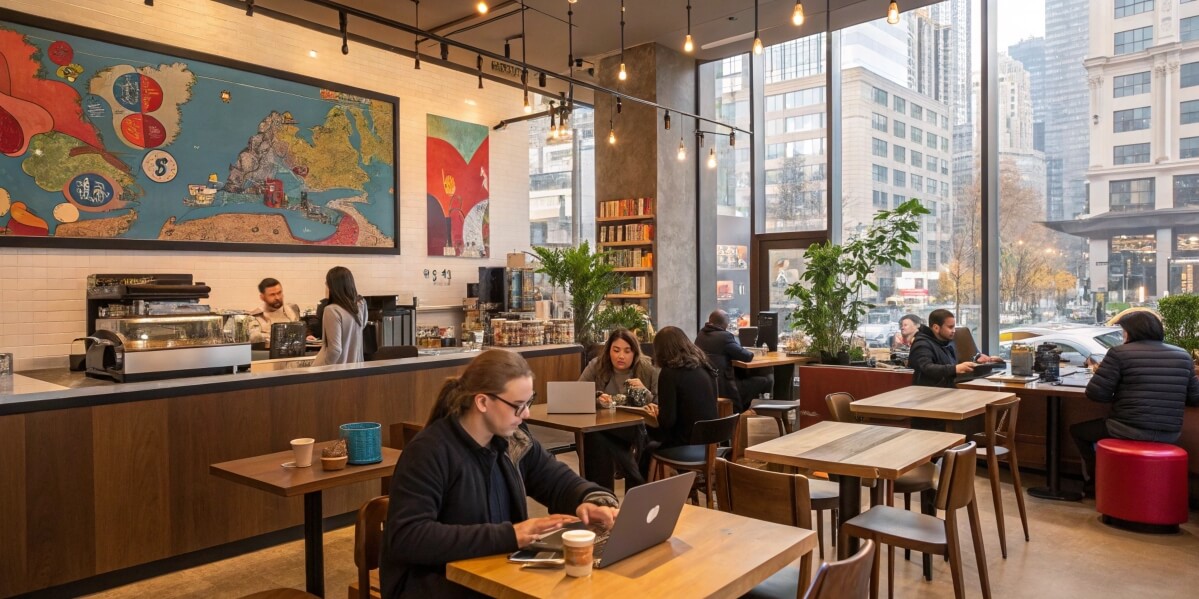
- Working from a café. Laptops have replaced pamphlets, but the idea is the same: a shared room where you can think around other people.
- Meeting friends or clients over coffee. A coffee meeting is still a low-pressure way to talk business.
- Specialty and neighborhood shops. Independent cafés often aim to be local gathering places, not just drink counters.
- Chain cafés built around the “third place” idea. Some large brands openly use that language in their branding.
The drinks have changed a lot, from Turkish coffee to espresso to cold brew. The room itself is still recognizable.
A Note on Limits and Sources
Coffee house history is full of popular stories, and some are repeated more confidently than the evidence allows. Exact opening dates, the “first” venue in a given city, and the role of any one café in a big institution often differ between sources. When you read or share these details, treat them as general history, not precise records. For specific claims, check academic histories or museum and archive sources.
FAQ
What was the main legacy of coffee houses? They created public spaces for conversation and information exchange. That helped shape newspapers, trade, and the modern café as a social space.
Why were coffee houses called penny universities? The nickname reflects the idea that a small payment, often described as a penny, got you a drink and access to learning through the conversation around you.
Did coffee houses really start the stock market? Not by themselves. Traders used London coffee houses as meeting places in the late 1600s, and that practice fed into the later formal exchange. It is fair to say they helped, not that they created it alone.
Are modern cafés the same as historic coffee houses? Not exactly, but they share the social role. Today’s cafés add new drinks, equipment, and technology, but people still use them to meet, talk, and work.