Yes, coffee can cause bloating, but not in everyone. Most people don’t get stomach distress from a cup of coffee, and bloating is only one possible symptom for the minority who do. When it happens, the coffee itself is sometimes the trigger. Often it’s what you add to it, how fast you drink it, or an underlying gut sensitivity.
This guide covers the most likely causes, how to tell them apart, and a simple way to find your own trigger. It also lists the signs that mean you should talk to a doctor.
What Bloating Actually Feels Like
Bloating is a feeling of tightness or fullness in your belly. It may come with gas, but you can feel bloated without any visible swelling. Many things cause it, including eating too fast, certain foods, stress, and gut conditions. Coffee is one possible trigger among many, so it helps to look at the whole picture.
6 Reasons Coffee Can Make You Feel Bloated
1. Coffee Wakes Up Your Gut
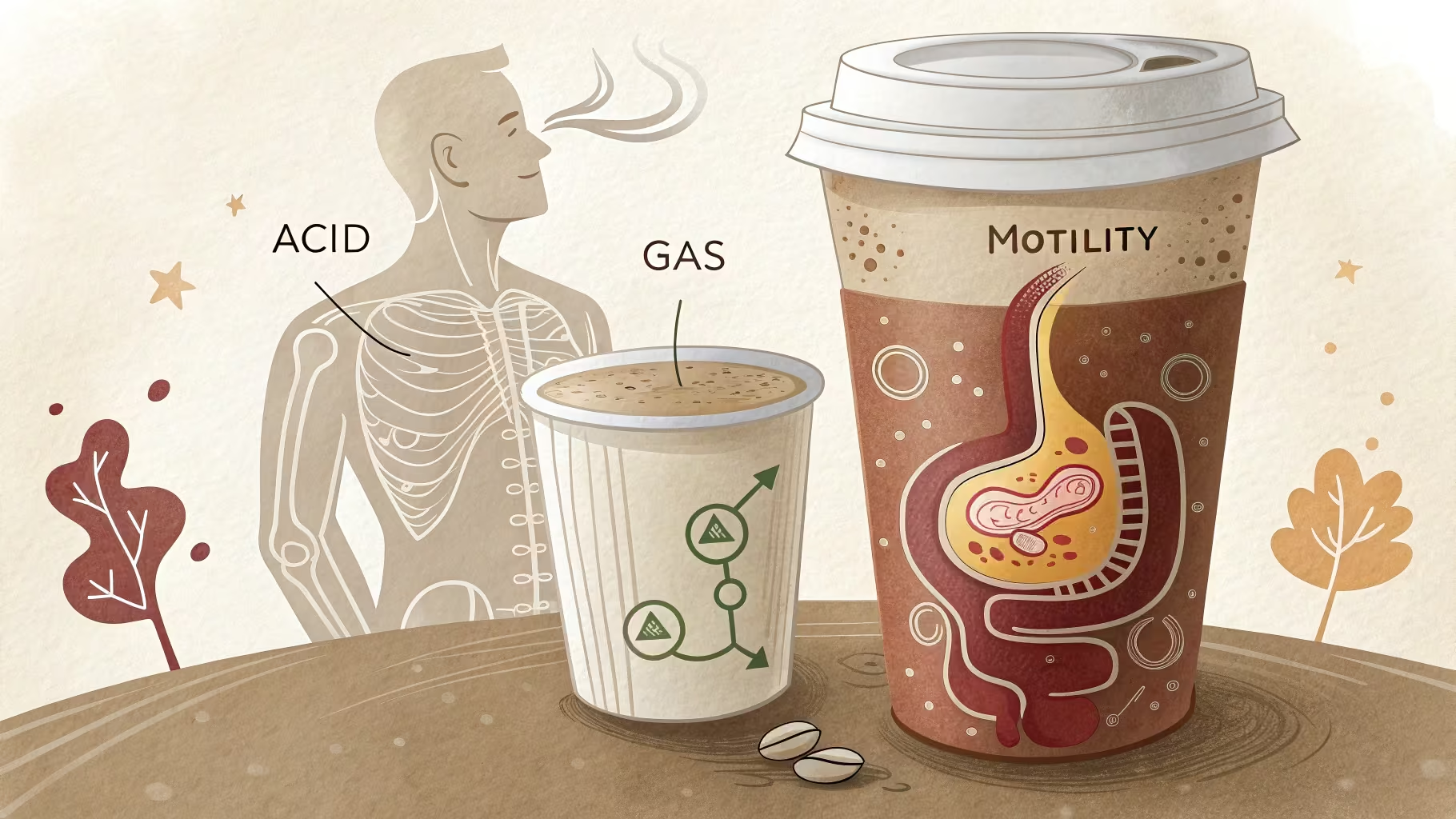
Coffee can speed up activity in your colon. In one small study, coffee stimulated colon activity about as much as a 1,000-calorie meal. Decaf had a weaker effect, but it still did more than water. That means caffeine isn’t the whole story.
This doesn’t happen to everyone. In an older survey, only 29% of 99 volunteers said coffee made them feel the urge to go. If you’re in that group, extra gut movement, cramping, and gas can leave you feeling bloated.
2. Milk or Cream (Lactose)
If you’re lactose intolerant, the dairy in your latte may be the real problem. The American College of Gastroenterology lists dairy among foods that cause bloating for some people, because gas forms in the gut. Even a small amount of lactose can bother sensitive people. A splash of half-and-half in each of your three daily cups adds up.
3. Sweeteners and Sugar Alcohols
Sugar-free syrups, “light” creamers, and some sweeteners contain sugar alcohols such as sorbitol, xylitol, and erythritol. Your gut doesn’t absorb these well, and they commonly cause gas and bloating. Check the ingredient list on flavored creamers and syrups. This is one of the easiest causes to overlook.
4. Acidity and an Empty Stomach
Coffee is mildly acidic, with an average pH of about 4.85 to 5.10. For some people, coffee on an empty stomach brings on stomach discomfort, nausea, or reflux, which can feel like bloating. Having coffee with food often helps. The evidence that acidity alone causes bloating is thin, so treat it as one possible factor, not a sure cause.
5. Drinking Too Much, Too Fast
Gulping a large iced latte on your commute can make you swallow extra air. Several big cups a day also means more caffeine for your gut to react to. If you’re not sure where your limit is, our guide on how much coffee is too much can help.
6. A Sensitive Gut or IBS
People with irritable bowel syndrome (IBS) or other digestive conditions often find coffee is a trigger. If you get bloating after many foods and drinks, not just coffee, an underlying condition may be the cause. Coffee is probably just one of several triggers.
Quick Diagnosis Table
| What you notice | Likely cause | What to try |
|---|---|---|
| Bloating only with lattes, cappuccinos, or creamer | Lactose | Switch to black coffee or lactose-free milk |
| Bloating only with flavored or “sugar-free” drinks | Sugar alcohols or sweeteners | Use plain sugar or a small amount of honey, or skip sweetener |
| Cramps, urgency, or loose stools soon after drinking | Gut stimulation | Smaller cups, drink with food, try half-caf |
| Nausea or burning on an empty stomach | Acid sensitivity | Eat first, then drink coffee |
| Bloating after big or fast drinks | Swallowed air or too much volume | Sip slowly and cut the cup size |
| Bloating after many foods, not just coffee | Broader gut sensitivity | Talk to a doctor or dietitian |
How to Find Your Trigger in One Week
Change one thing at a time. If you change everything at once, you won’t know what helped.
- Days 1–3: Drink your usual coffee black, with no milk and no sweetener, in a normal-sized cup. Eat something first. Note how you feel.
- Days 4–5: Add back your usual milk. If the bloating returns, dairy is a likely cause.
- Days 6–7: Add back your usual sweetener or syrup. If bloating returns, check it for sugar alcohols.
- Still bloated on black coffee? Try half-caf or decaf for a few days. Decaf still stimulates the gut a little, so it won’t fix every case. If you want to try it, see decaf coffee and digestion.
Keep a quick note on your phone with what you drank and how you felt. Patterns show up fast.
Easy Ways to Cut Down on Coffee Bloating
If you already feel unwell after too much coffee, see our tips on remedies for stomach problems after too much coffee.
When to See a Doctor
Occasional mild bloating after coffee is usually not a concern. Talk to a doctor if you have:
This article is general information, not medical advice.
FAQ
Does black coffee cause bloating?
It can for some people, especially those sensitive to its effect on the gut or to acidity on an empty stomach. If black coffee is fine but lattes aren’t, the milk is the likelier cause.
Does decaf cause less bloating?
Sometimes. Decaf has a weaker effect on the colon than regular coffee, but it still has some effect. Other compounds in coffee likely play a role too, so decaf isn’t a guaranteed fix.
Does cold brew cause less bloating?
Possibly, for some people, because it often tastes less acidic. There isn’t strong proof that it prevents bloating, so test it yourself.
Why do I feel bloated right after coffee?
Quick reactions often come from gut stimulation, an empty stomach, or milk and sweeteners. Experiment with one change at a time to find the cause.
Can I keep drinking coffee if it bloats me?
Often yes. Adjusting the cup size, what you add, and when you drink it solves the problem for many people. If it doesn’t, ask a doctor or dietitian.