
No, cold brew is not the same as iced coffee. Although both drinks are served cold and often look identical, the main difference is how they’re brewed.
Cold brew is made by steeping ground coffee in cold or room-temperature water for several hours. Iced coffee is usually brewed with hot water, then cooled and served over ice.
That difference affects more than preparation time. It also changes how your coffee tastes, how strong it seems, and sometimes how much caffeine ends up in your glass.
If you’ve ever wondered whether cold brew is just cold coffee, this guide explains the key differences and helps you decide which drink deserves a place in your daily coffee routine.
Cold Brew vs. Iced Coffee: Quick Comparison
Before getting into the details, here’s how these two popular coffee drinks compare.
| Feature | Cold Brew | Iced Coffee |
|---|---|---|
| Brewing method | Coffee steeped in cold water | Hot-brewed coffee served cold |
| Water temperature | Cold or room temperature | Hot |
| Typical brewing time | 12–24 hours | A few minutes |
| Grind size | Usually coarse | Depends on brewing method |
| Flavor | Smooth, mellow, often chocolatey | Brighter, more aromatic |
| Perceived acidity | Often lower | Often more noticeable |
| Caffeine | Depends on concentration and serving size | Depends on recipe and serving size |
| Preparation | Requires advance planning | Quick to prepare |
| Equipment | Jar or cold brew maker and filter | Regular coffee maker and ice |
| Best for | Make-ahead coffee and mellow flavors | Quick, refreshing coffee |
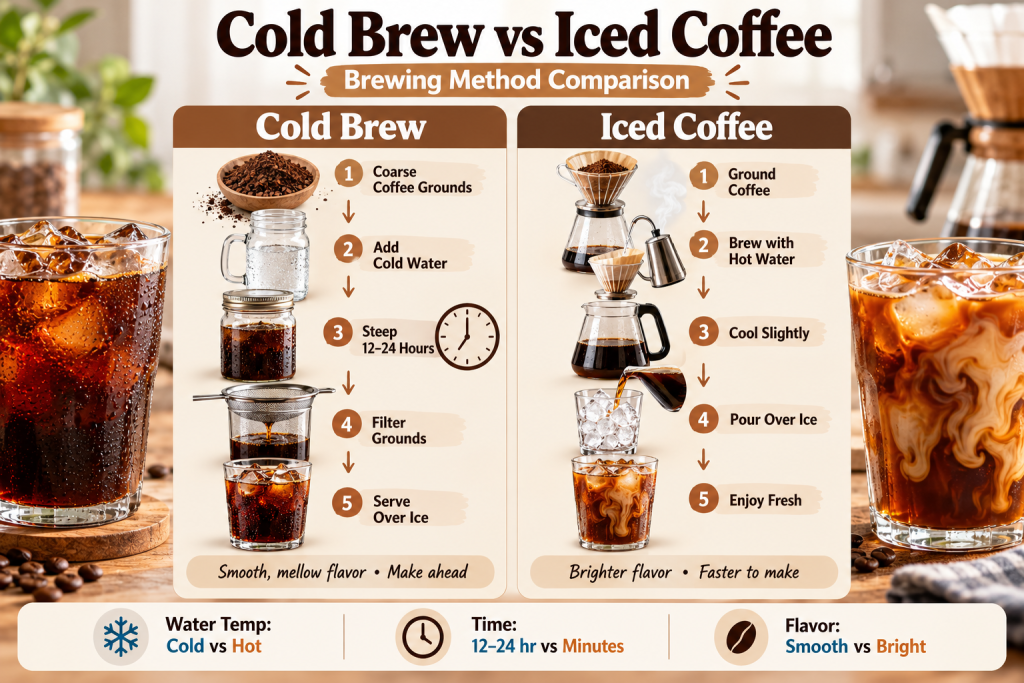
The biggest takeaway: Cold brew gets its character from slow extraction without heat, while iced coffee gets its flavor from traditional hot brewing.
Neither is automatically better. Your preferred taste and preparation style matter more.
What Is Cold Brew Coffee?
Cold brew is coffee made by soaking ground coffee in cold or room-temperature water for an extended period, usually around 12–24 hours.
Instead of relying on heat to extract coffee compounds quickly, this method uses time.
Once brewing is complete, the coffee grounds are filtered out, leaving a smooth coffee that can be served over ice or mixed with water or milk.
Cold brew can be prepared in two forms:
Cold brew often has a mellow flavor, with chocolatey, nutty, or naturally sweet-tasting notes. However, the exact flavor depends on the coffee beans, roast, grind size, and brewing recipe.
Is Cold Brew Just Cold Coffee?
Not exactly.
Cold brew refers to a specific brewing process, not simply the temperature of the finished drink.
If you prepare regular hot coffee and leave it in the refrigerator overnight, you’ve made chilled coffee—not traditional cold brew.
The distinction matters because hot and cold water extract coffee compounds differently.
What Is Iced Coffee?
Iced coffee is typically made by brewing coffee with hot water, cooling it, and serving it over ice.
You can prepare it using familiar brewing equipment, including a drip coffee maker, pour-over setup, or French press.
The process is straightforward. Brew your coffee, allow it to cool if necessary, and pour it into a glass filled with ice.
Some coffee shops intentionally brew iced coffee stronger than regular hot coffee. This helps prevent the drink from becoming too watery as the ice melts.
For example, Starbucks describes its iced coffee as hot-brewed at double strength before being poured over ice.
Unlike cold brew, you don’t need to plan your iced coffee preparation several hours in advance.
A quick spelling tip: If you’re wondering whether it’s ice coffee or iced coffee, the standard English term is iced coffee.
5 Key Differences Between Cold Brew and Iced Coffee
Although their ingredients are similar, several practical differences can affect which drink you prefer.
1. Brewing Method and Preparation Time
This is the most important distinction.
Cold brew requires ground coffee to remain in contact with cool water for hours. Iced coffee uses hot water to extract the coffee much faster.
For cold brew, you generally need to:
- Combine ground coffee with water.
- Allow it to steep for several hours.
- Filter out the grounds.
- Serve the finished coffee cold.
For iced coffee, you simply brew your usual coffee and cool it before serving.
If you’re preparing coffee before leaving for work, iced coffee is the faster option.
However, cold brew can be convenient when you prepare a batch in advance.
2. Taste and Flavor Profile
Cold brew generally tastes smoother and more mellow than iced coffee.
Because it doesn’t use hot water, its extraction process creates a different balance of flavor compounds.
Many cold brew recipes produce rounded flavors with chocolatey or nutty notes.
Iced coffee often retains more of the brighter characteristics associated with hot brewing, including fruity, floral, or citrus-like flavors.
This doesn’t mean every cold brew tastes sweet or every iced coffee tastes sharp.
Your choice of beans and brewing technique still makes a significant difference.
Which should you choose?
If you enjoy smooth coffee with a mellow finish, cold brew is worth trying. If you prefer the familiar flavor of freshly brewed coffee, iced coffee may be more satisfying.
3. Acidity: Is Cold Brew Really Less Acidic?
Cold brew often tastes less acidic than hot-brewed iced coffee, but there’s an important scientific distinction.
A 2018 study by Rao and Fuller, published in Scientific Reports, compared hot- and cold-brewed coffee prepared under controlled conditions.
The researchers found that both methods produced coffee with comparable pH levels. However, the hot-brewed samples contained higher total titratable acidity.
In simple terms, cold brew can contain fewer extracted acidic compounds without having a dramatically different pH.
Read the original study on cold brew acidity.
This helps explain why cold brew may taste smoother or less sharp.
However, it doesn’t prove that cold brew is universally better for digestion or suitable for everyone with stomach sensitivity.
4. Caffeine Content: Which One Is Stronger?
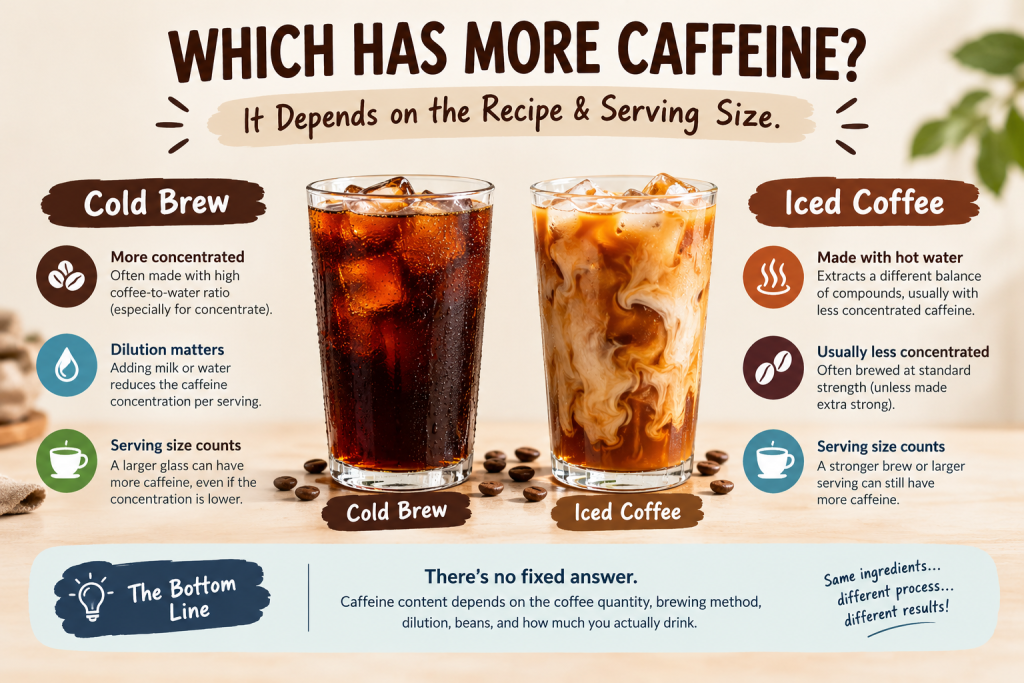
A common assumption is that cold brew always has more caffeine than iced coffee.
That’s not necessarily true.
Cold brew is frequently prepared with a relatively high amount of ground coffee, especially when making concentrate. This can produce a drink with a high caffeine concentration.
However, the caffeine in your finished glass depends on several factors:
A large serving of diluted cold brew can contain less caffeine than a strong iced coffee made with more ground coffee.
Likewise, a small serving of cold brew concentrate may contain substantial caffeine despite its smaller volume.
Practical tip: If you’re watching your caffeine intake, check the caffeine information for the specific product or café drink rather than assuming one brewing method is always stronger.
For homemade coffee, remember that adding water reduces caffeine concentration but doesn’t remove caffeine from the original portion of coffee.
5. Convenience, Equipment, and Cost
Both methods are easy to prepare at home, but they fit different routines.
Iced coffee is convenient when you want something refreshing immediately. If you already own a regular coffee maker, you may not need additional equipment.
Cold brew is convenient when you prefer preparing coffee ahead of time. A large jar, coarse coffee grounds, and a suitable filter are usually enough.
However, cold brew concentrate often requires more coffee grounds per batch than a standard hot-brewing recipe.
That can increase its ingredient cost, although the actual cost per serving depends on your recipe and dilution.
If convenience matters most, consider when you want to do the preparation rather than simply comparing brewing times.
How to Make Cold Brew and Iced Coffee at Home
You don’t need expensive equipment to prepare either drink.
The following beginner-friendly recipes provide starting points that you can adjust to your preferred coffee strength.
Method 1: Easy Homemade Cold Brew
This version makes ready-to-drink-style cold brew rather than a highly concentrated mixture.
Ingredients:
- 60 g (about 2 oz) coarsely ground coffee
- 480 g (approximately 2 cups) cold drinking water
- Ice for serving
- Milk or sweetener, optional
Equipment: Large jar, spoon, and coffee filter.
Suggested brewing ratio: 1:8 coffee to water by weight.
Instructions:
- Add the coarsely ground coffee to a clean jar.
- Pour in the cold water.
- Stir gently to ensure all the grounds are saturated.
- Cover the jar and refrigerate for approximately 12–18 hours.
- Strain the mixture through a suitable coffee filter to remove the grounds.
- Pour the filtered coffee over ice.
- Taste and add water or milk if you prefer a lighter drink.
The finished yield will be lower than the starting water volume because the coffee grounds retain some liquid.
Helpful tip: If your cold brew tastes too strong, dilute it before serving. If it tastes weak, try adjusting the coffee-to-water ratio in your next batch.
Store the filtered coffee covered in the refrigerator and prepare it using clean equipment. For a simple home routine, make small batches that you can consume within a few days.
Method 2: Quick Iced Coffee Using the Flash-Brew Method
Flash brewing, sometimes called Japanese-style iced coffee, uses hot water to brew coffee directly over measured ice.
The ice rapidly cools the freshly brewed coffee while becoming part of the recipe’s total water.
Ingredients:
- 20 g (approximately 0.7 oz) ground coffee
- 180 g (approximately 6.1 fl oz) hot water
- 120 g (approximately 4.2 oz by weight) ice
- Milk or sweetener, optional
Equipment: Pour-over brewer, paper filter, and heat-safe serving vessel.
Suggested ratio: 1:15 coffee to total water, including ice.
Instructions:
- Place 120 g of ice in a heat-safe brewing vessel.
- Insert the paper filter into your pour-over brewer.
- Add the ground coffee.
- Heat the water to your usual brewing temperature, approximately 195–205°F (90–96°C).
- Slowly pour the 180 g of hot water over the grounds using your normal pour-over technique.
- Allow the brewed coffee to drip directly onto the ice.
- Swirl gently to help the coffee cool and mix.
- Transfer to a serving glass and add more ice if desired.
Helpful tip: Don’t replace the measured ice with extra brewing water. The melting ice is already included in the recipe’s total water amount.
If your iced coffee regularly tastes watery, measure your ice instead of adding an unpredictable amount.
Which Is Better: Cold Brew or Iced Coffee?
The answer depends on your preferences and daily routine.
Choose cold brew if you:
- Prefer a smooth, mellow coffee flavor.
- Like preparing coffee in advance.
- Want a drink that works well with milk or flavored syrups.
- Enjoy experimenting with coffee concentration and dilution.
Choose iced coffee if you:
- Want your coffee ready within minutes.
- Enjoy brighter and more aromatic coffee flavors.
- Already own regular coffee-brewing equipment.
- Prefer preparing a fresh drink rather than making a batch ahead of time.
There’s no need to limit yourself to one method.
You can even use the same coffee beans to prepare both drinks and explore how brewing temperature changes their flavor.
Frequently Asked Questions
Is cold brew stronger than regular iced coffee?
Not always. Cold brew concentrate can be stronger per fluid ounce, but the caffeine content of the final drink depends on the brewing ratio, dilution, coffee beans, and serving size.
Can you turn regular coffee into cold brew?
No. Refrigerating already-brewed hot coffee makes chilled coffee. Traditional cold brew requires extracting the coffee grounds using cold or room-temperature water.
Is cold brew sweeter than iced coffee?
Cold brew often has a naturally mellow flavor that people perceive as sweeter. However, the drink doesn’t automatically contain added sugar, and its sweetness depends on the coffee and brewing method.
Is an iced Americano the same as iced coffee?
Not exactly. An iced Americano combines espresso, cold water, and ice. Traditional iced coffee is usually made from hot-brewed drip or filter coffee that has been chilled.
Can you add milk to both cold brew and iced coffee?
Yes. Both work with regular milk, oat milk, almond milk, cream, or your favorite coffee sweetener. The brewing method doesn’t prevent you from customizing either drink.
Final Thoughts
Cold brew and iced coffee might look almost identical, but they offer different drinking experiences.
Cold brew uses time and cool water to create a generally smoother, more mellow drink. Iced coffee uses traditional hot brewing to produce a refreshing cup that often retains brighter coffee flavors.
Neither method automatically guarantees more caffeine or a better cup of coffee.
If you enjoy planning ahead and prefer mellow flavors, start with cold brew. If you want something quick that retains the character of freshly brewed coffee, iced coffee is an excellent choice.
Ultimately, the best way to choose is to understand how each drink is prepared and select the method that fits your taste and routine.