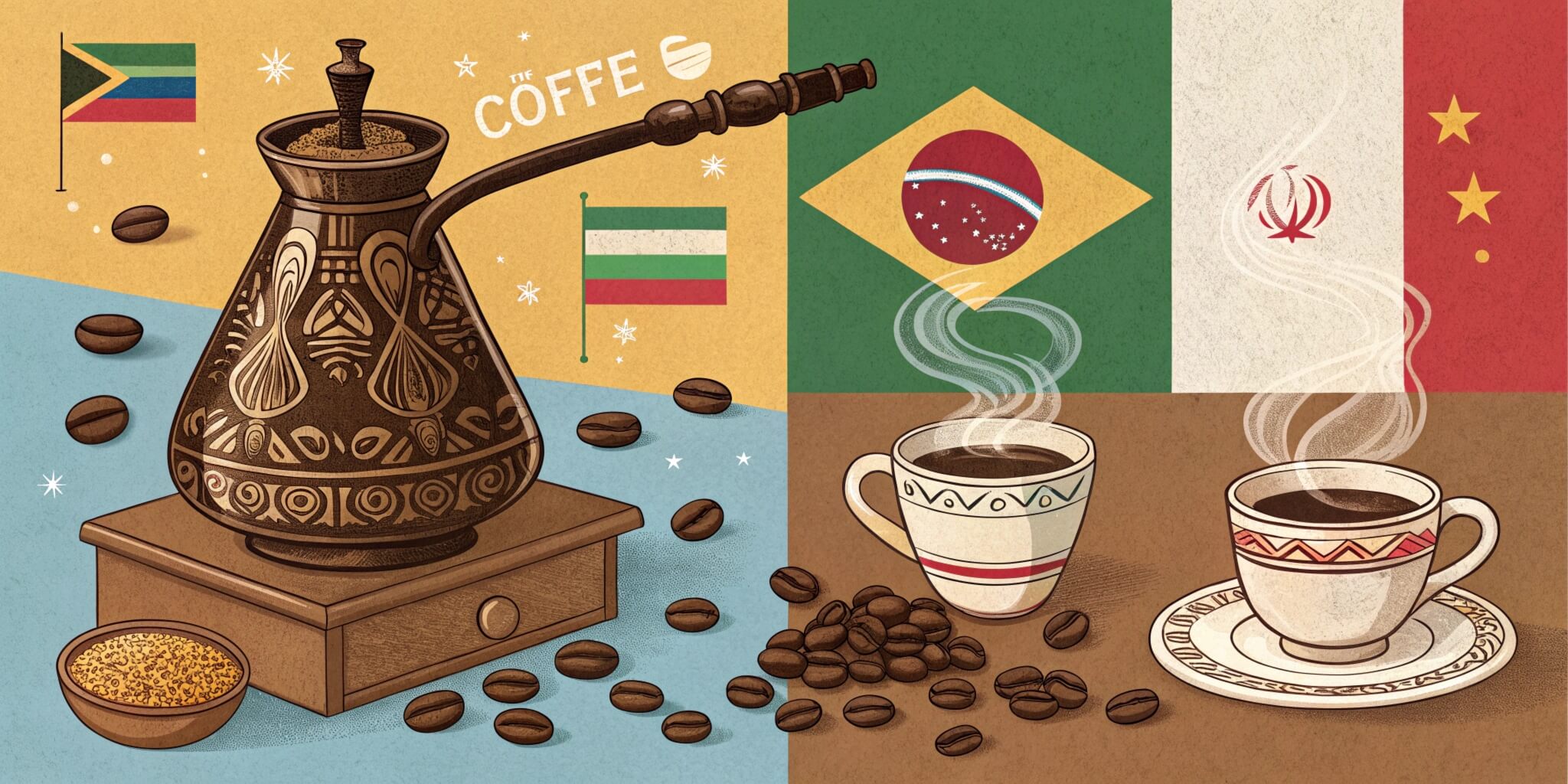
Coffee is not made the same way everywhere. In Turkey it is boiled in a small pot. In Ethiopia it is roasted in front of guests. In Vietnam it drips slowly over a glass of sweet condensed milk. Each method is shaped by local tools, tastes, and habits.
This guide covers seven coffee traditions, what makes each one different, and how you can try the brews at home. You do not need special skills. A few of them only need a saucepan.
Coffee Traditions at a Glance
Here is a quick comparison before we go region by region.
| Tradition | Where | Key tool | Defining feature | Served |
|---|---|---|---|---|
| Ethiopian coffee ceremony | Ethiopia | Jebena (clay pot) | Beans roasted and brewed in front of guests | Three rounds |
| Turkish coffee | Turkey | Cezve (small pot) | Powder-fine grounds, unfiltered | Small cup, grounds settle |
| Arabic coffee (qahwa) | Arabian Peninsula | Dallah (long-spouted pot) | Light roast, cardamom | Tiny handleless cups |
| Italian espresso | Italy | Espresso machine | Quick shot at the bar | Standing, in minutes |
| Vietnamese phin coffee | Vietnam | Phin (metal filter) | Strong brew with condensed milk | Hot or over ice |
| Swedish fika | Sweden | Any brewer | A social break, not a brew method | With something sweet |
| Café de olla | Mexico | Clay pot or saucepan | Cinnamon and unrefined sugar | Warm, in a mug |
Coffee Traditions Around the World, Region by Region
Ethiopia: The Coffee Ceremony
Ethiopia is widely considered the birthplace of coffee, and the ceremony there is about hospitality as much as drinking. The host roasts green beans in a pan, grinds them by hand, and brews them in a round-bellied clay pot called a jebena. Guests are usually served small cups in up to three rounds, often with incense burning nearby.
The ceremony can take an hour or more. That is the point. It is a time to talk. For the bean’s backstory, see our article on the origins of Ethiopian coffee.
Turkey: Coffee From a Cezve
Turkish coffee uses beans ground to a powder, water, and often sugar, all heated together in a small long-handled pot called a cezve. Nothing is filtered. The grounds settle at the bottom of the cup, so you sip slowly and leave the last bit. UNESCO added Turkish coffee culture and tradition to its list of intangible cultural heritage in 2013.
It is also a social ritual. Some people read patterns in the leftover grounds for fun.
The Arabian Peninsula: Qahwa
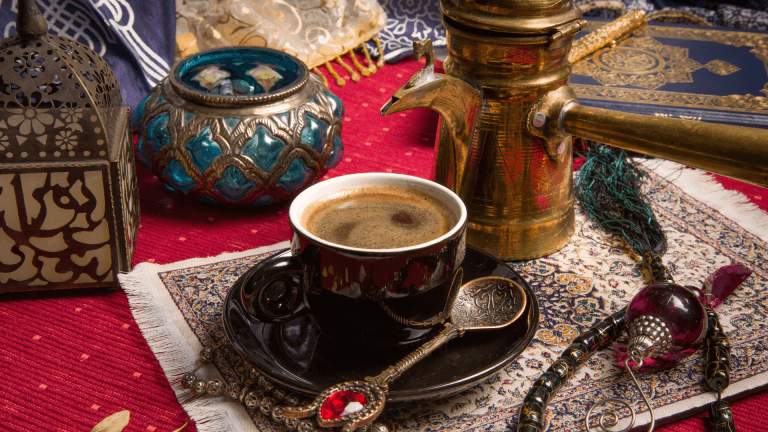
Arabic coffee, or qahwa, is usually a lighter roast than most Americans expect. It is often flavored with cardamom and sometimes with other spices, such as saffron or cloves. The host pours small amounts from a dallah into tiny cups, which signals generosity. UNESCO recognized Arabic coffee as a symbol of generosity in 2015.
Customs vary by country and family. In many places, you tell the host you have had enough by gently shaking your cup.
Italy: Espresso at the Bar
In Italy, “caffè” usually means a shot of espresso. Many people drink it standing at a bar, in a couple of minutes, and then go on with their day. Milk drinks like cappuccino are traditionally a morning habit, and many Italians skip them after a meal.
The ritual is speed and routine, not ceremony. If you want to know what else is on the menu, our guide to types of espresso drinks explains the differences.
Vietnam: Phin Coffee and Condensed Milk
A phin is a small metal filter that sits on top of a cup. Hot water drips through the grounds slowly, and the result is a strong, dark brew. Vietnam grows a lot of robusta, which tastes bolder and more bitter than arabica. Sweetened condensed milk balances it, either hot or over ice as cà phê sữa đá.
Sweden: Fika
Fika is a Swedish habit of pausing for coffee and something sweet, like a cinnamon bun, with other people. The brew itself is usually simple. The ritual is the break. You can practice it anywhere with any coffee you already own.
Mexico: Café de Olla
Café de olla is coffee simmered with cinnamon and piloncillo, an unrefined cane sugar. Traditionally it is made in a clay pot, which people say adds an earthy taste. The result is sweet, warm, and spiced, which makes it a good cold-weather drink.
How to Try These Brews at Home
These are suggested starting points, not fixed rules. Adjust to your taste.
Turkish Coffee (1 small cup)
You need a cezve (or a very small saucepan) and coffee ground as fine as powder. Pre-ground “Turkish” coffee works well.
- Add ¼ cup (about 2.5 fl oz / 75 ml) cold water to the cezve.
- Stir in 1 heaping teaspoon (about 6–7 g) of coffee. Add sugar if you like.
- Heat on low, without stirring after the grounds are wet.
- When foam rises to the top, take the pot off the heat before it boils over.
- Pour into a small cup and wait about a minute for the grounds to sink.
Vietnamese Phin Coffee (1 cup)
- Add 1–2 tablespoons sweetened condensed milk to a heat-safe glass.
- Place the phin on top and add 2 tablespoons (about 15 g) of medium-coarse dark roast coffee.
- Pour in a splash of hot water, wait 20–30 seconds, then add about 4 fl oz (120 ml) more.
- Let it drip for roughly 4–5 minutes. Stir, and pour over ice if you want it cold.
Café de Olla (about 4 small servings)
- Simmer 4 cups (about 1 liter) of water with 1 cinnamon stick and about 3 oz (85 g) piloncillo. Dark brown sugar (about ¼ cup) works as a substitute.
- Once the sugar dissolves, turn off the heat and stir in ¼ cup coarsely ground coffee.
- Cover and steep 5 minutes.
- Strain into mugs.
Common Mistakes When Trying a New Tradition
FAQ
Which coffee tradition is the oldest? Coffee’s origins are generally traced to Ethiopia, but there is no exact date for when any single ritual began. Customs developed over time in different places.
What is the easiest tradition to try first? Café de olla and Turkish coffee are the easiest, since you only need a saucepan or small pot. Phin coffee needs a cheap filter.
Is Turkish coffee stronger than espresso? It often tastes stronger because it is unfiltered and has fine grounds, but caffeine depends on dose and serving size. For caffeine numbers, check our espresso guides.
Do I need special equipment? A cezve, jebena, phin, or dallah gives the most authentic experience. Still, a small saucepan and a fine grinder are enough to get close.