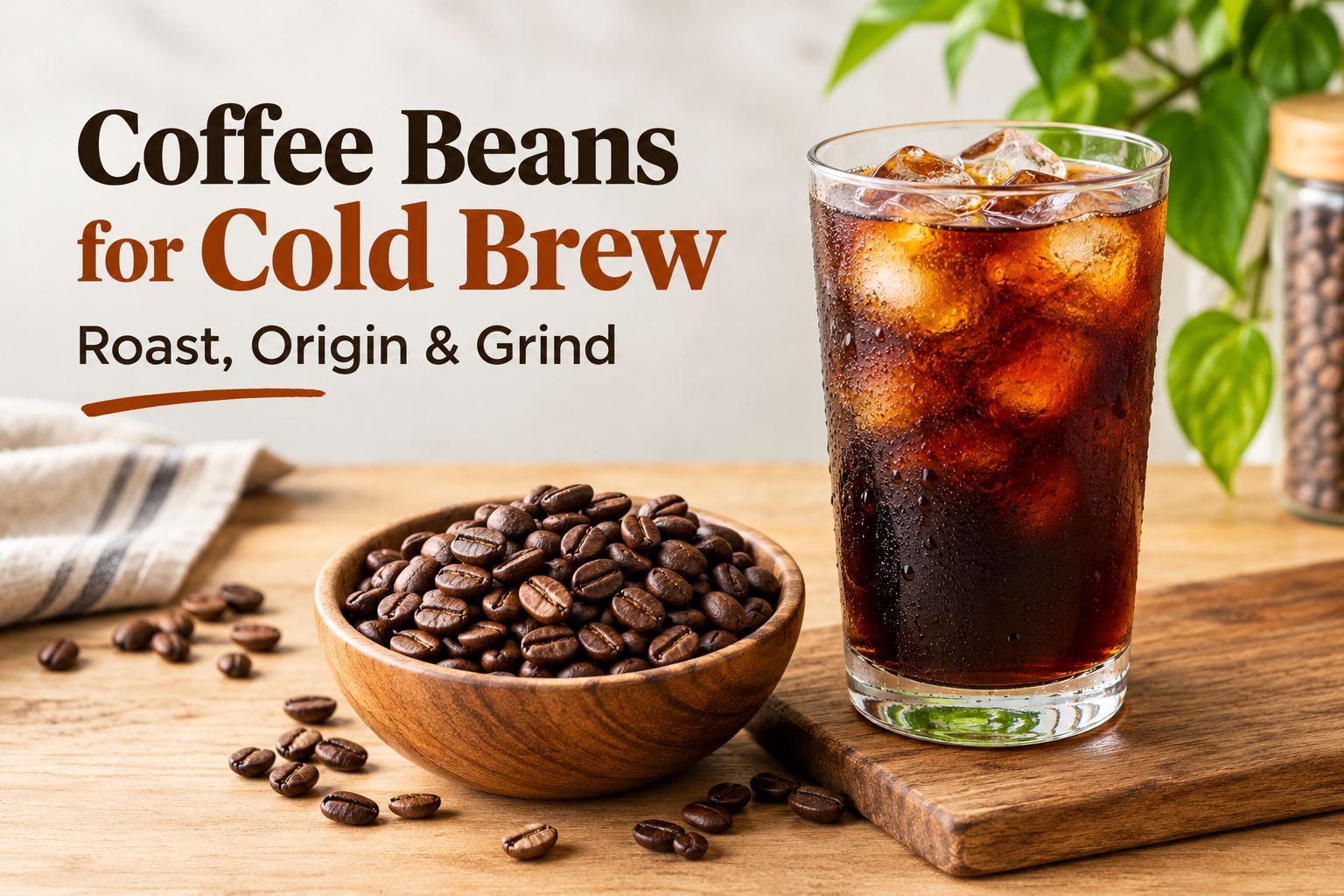
The best coffee beans for cold brew are fresh, whole beans in a medium to dark roast, ground coarse. These beans tend to taste smooth, chocolatey, and low in sharp acidity when brewed cold. But there is no single right answer. Light roasts can make a bright, fruity cold brew, and almost any good bean works if you grind and steep it well.
This guide explains how roast, origin, freshness, and grind affect your cold brew. It also helps you pick good beans for cold brew without overspending.
What Makes Good Beans for Cold Brew?
Cold brew steeps for 12 to 18 hours in cold water. That is a gentle, slow extraction. It pulls out sweetness and body, and it pulls out less of the sharp acidity you often notice in hot coffee.
Because of this, the beans that suit cold brew are not always the ones you’d choose for pour over or espresso. When you shop, look at four things:
Taste is personal, so treat the suggestions below as starting points.
Best Roast Level for Cold Brew
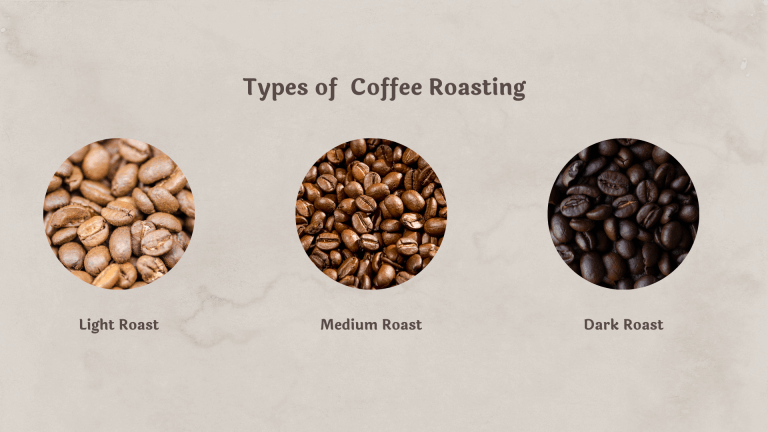
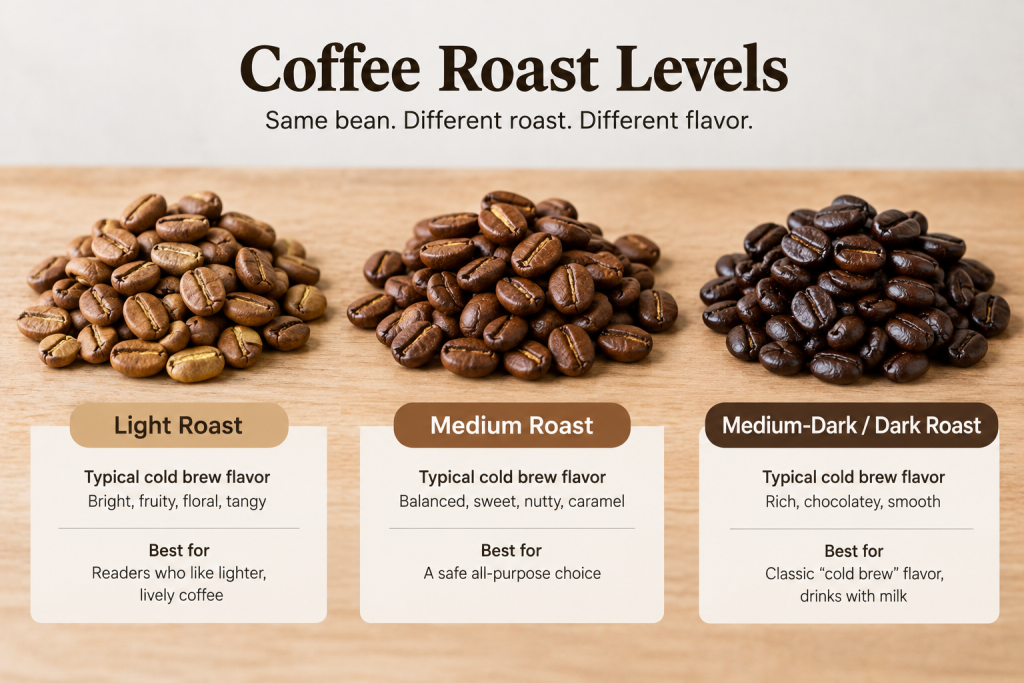
Roast level is the easiest way to steer your cold brew’s flavor.
| Roast | Typical cold brew flavor | Best for |
|---|---|---|
| Light | Bright, fruity, floral, tangy | Readers who like lighter, lively coffee |
| Medium | Balanced, sweet, nutty, caramel | A safe all-purpose choice |
| Medium-dark | Rich, chocolatey, smooth | Classic “cold brew” flavor, drinks with milk |
| Dark | Bold, roasty, sometimes smoky or bitter | Strong flavor that stands up to milk and sweetener |
Medium to medium-dark is a good place to start. These roasts give the smooth, chocolate-and-nut taste many people expect from cold brew. They also work well diluted with water, milk, or ice.
Light roasts can taste sour or thin when brewed cold if the steep is too short. If you like them, try a longer steep or a higher coffee ratio.
Dark roasts can taste bitter or ashy, especially if the grind is too fine or the steep too long. If you want bold flavor, try a coarser grind first.
Does Origin Matter for Cold Brew?
Origin affects flavor, but it matters less than roast and freshness for most home brewers. Here are some general patterns. These describe common tendencies, not rules. Flavor varies by farm, processing, and roast.
If you’re not sure, a blend labeled for cold brew or a Latin American single origin is a low-risk choice.
Should You Use Expensive Beans?
You don’t need the most expensive beans. Cold brew is forgiving. Its long, cold steep softens some flavors that stand out in hot coffee. But fresh, decent-quality beans still taste better than stale ones.
If you’re brewing a big batch, a mid-priced fresh bag is usually a sensible choice. Save rare, delicate beans for methods like pour over, where you can taste their subtle flavors more clearly.
Freshness: Whole Beans vs. Pre-Ground
Freshness has a big effect on flavor. Coffee starts losing aroma soon after roasting, and ground coffee loses it faster than whole beans.
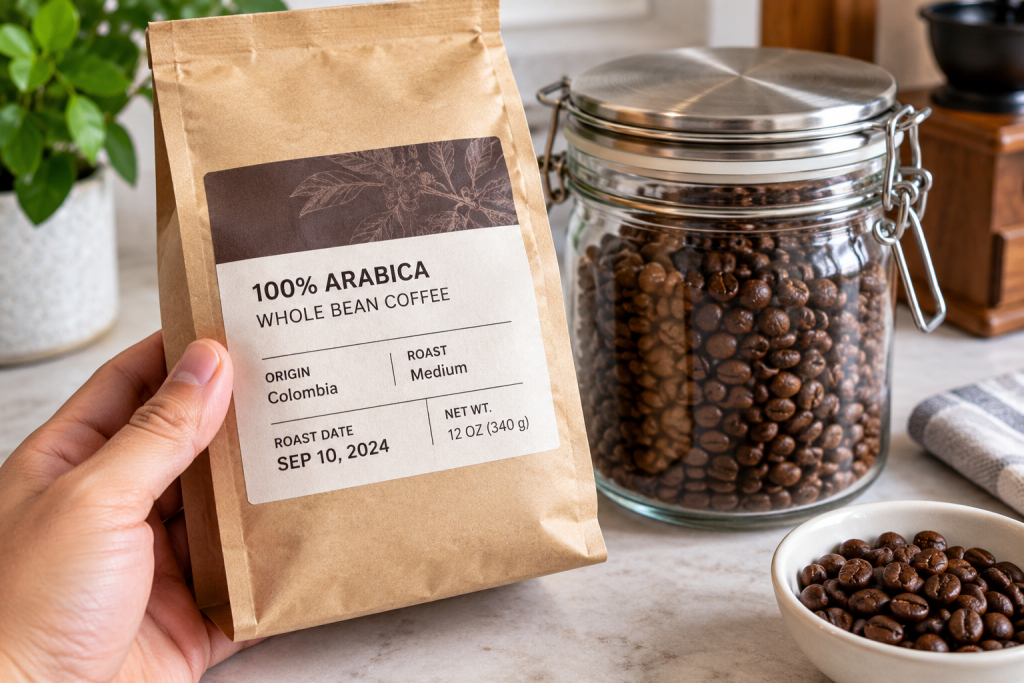
If you only have pre-ground coffee, choose one labeled coarse or for French press or cold brew. Fine pre-ground coffee often makes a bitter, cloudy batch.
Choosing the Right Grind
Even the best beans taste bad if the grind is wrong. For cold brew, grind coarse, about the size of coarse sea salt. Coarse grounds extract slowly and strain cleanly, which helps avoid bitterness and sediment.
Fine grounds extract too fast during a long steep. They can taste harsh and clog your filter. If you have a burr grinder, it gives a more even grind than a blade grinder.
Flavored Beans and Blends
You may see flavored coffees like vanilla or hazelnut. They can work for cold brew, but flavor oils and added flavorings may behave differently from plain beans. Some people find the flavor fades or turns artificial after a long steep. Try a small batch first.
Blends labeled “cold brew” are made to taste smooth when steeped cold. They’re a convenient shortcut if you don’t want to experiment.
Quick Buying Checklist
Frequently Asked Questions
Q01. Can I use any coffee beans for cold brew? Yes. Cold brew works with most beans. Roast and freshness change the flavor, but you don’t need special beans to make a good batch.
Q02. Are dark roast beans better for cold brew? Not always. Dark roasts give a bold, classic flavor, but they can taste bitter. Medium and medium-dark roasts are a more balanced starting point.
Q03. Can I use espresso beans for cold brew? Yes. Espresso beans are just coffee beans, often roasted medium to dark. Grind them coarse and steep as usual.
Q04. What are good beans for cold brew if I like it sweet and smooth? Try a medium or medium-dark roast from Latin America. These often taste nutty and chocolatey.