
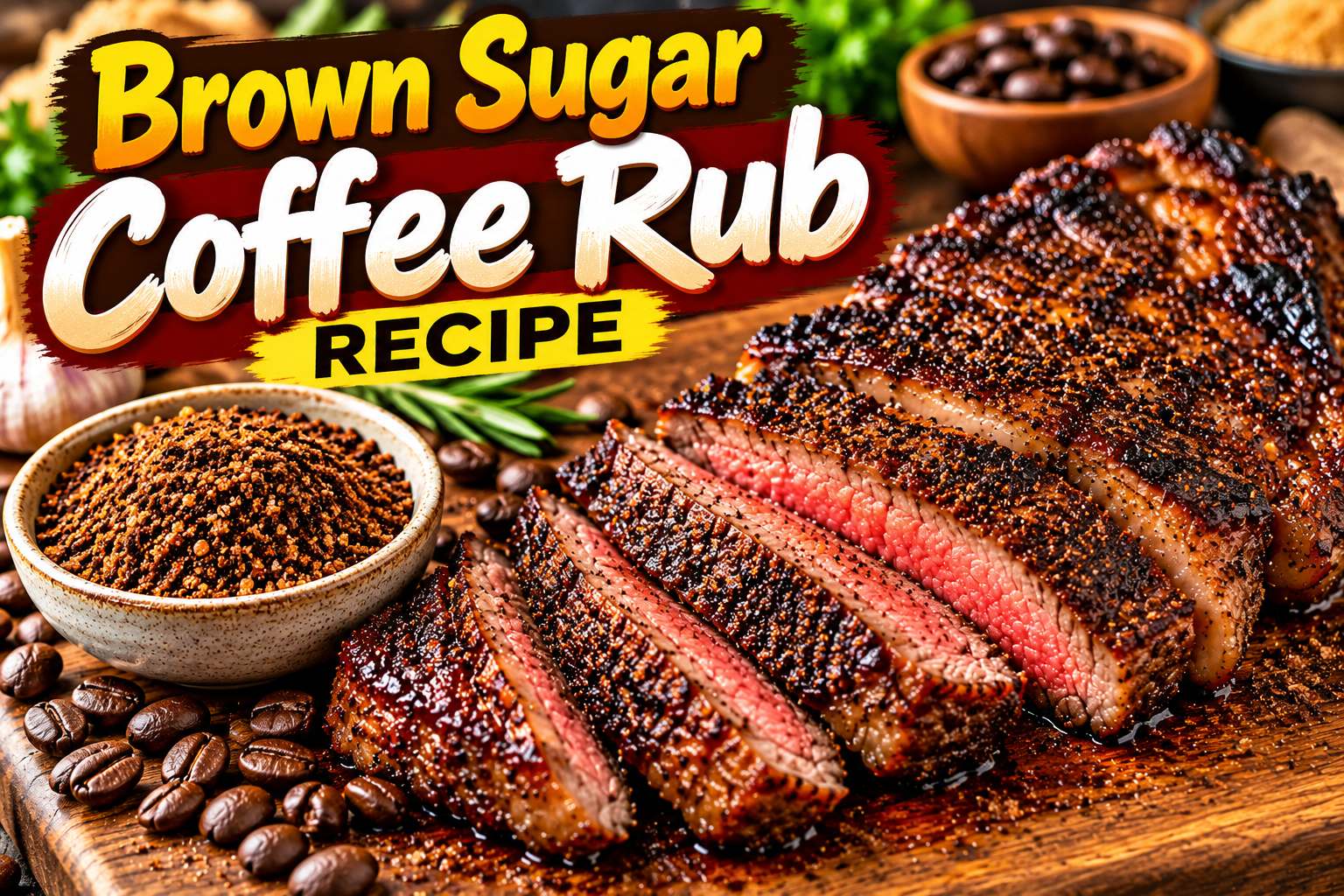
A brown sugar coffee rub is an easy way to add smoky, sweet, and savory flavor to steak, brisket, ribs, and other grilled meats. Ground coffee brings a deep, roasted flavor, while brown sugar balances its bitterness and helps create a flavorful crust as the meat cooks.
You can make this homemade coffee dry rub in about five minutes with simple pantry ingredients. It works for backyard grilling, oven roasting, and low-and-slow smoking.
This guide covers the exact ingredients, how to apply the rub, which coffee works best, and how to prevent the sugar and coffee from burning.
Easy Brown Sugar Coffee Rub Recipe
This recipe combines ground coffee, brown sugar, smoked paprika, and everyday seasonings. The measurements are suggested starting points, so you can adjust the sweetness, salt, and heat to suit your taste.
Recipe Card
Recipe: Homemade Brown Sugar Coffee Dry Rub
Prep Time: 5 minutes
Cook Time: None (for the rub itself)
Total Time: 5 minutes
Yield: Approximately ⅔ cup
Best For: Steak, brisket, pork tenderloin, ribs, and chicken
Equipment: Mixing bowl, measuring spoons, whisk, and airtight container
Ingredients
Coffee tip: Choose freshly ground, unbrewed coffee. A medium or medium-dark roast is a good starting point because it provides roasted flavor without making the seasoning unnecessarily intense.
Step-by-Step Instructions
Step 1: Measure the ingredients
Place the ground coffee, brown sugar, smoked paprika, salt, and other seasonings in a medium mixing bowl.
Break apart any large brown sugar clumps before mixing.
Step 2: Mix everything thoroughly
Use a whisk or fork to combine the ingredients until the blend looks evenly distributed.
The finished seasoning should have a deep reddish-brown color, with no large clumps of sugar.
Step 3: Adjust the seasoning
For a sweeter rub, add another teaspoon of brown sugar.
For stronger coffee flavor, add one teaspoon of ground coffee.
For extra heat, increase the cayenne pepper slightly.
Because this blend contains salt, consider how much additional salt you plan to use on the meat.
Step 4: Apply the rub
Pat the meat dry with paper towels. Sprinkle the seasoning evenly over the surface, then press it gently into the meat.
Start with approximately 1–2 tablespoons of rub per pound of meat, adjusting according to the cut and thickness.
You can apply it shortly before cooking or refrigerate the seasoned meat to let the flavors develop.
Step 5: Cook or store
Cook the seasoned meat using your preferred method, keeping the sugar-coated surface away from prolonged direct flames.
If you are making the seasoning ahead, transfer the unused dry mixture into a clean, airtight container.
Never return seasoning that has touched raw meat to your storage jar.
What Does Brown Sugar Coffee Rub Taste Like?
A coffee rub does not usually make steak or brisket taste like a cup of brewed coffee.
Instead, it adds roasted, earthy notes that complement the natural savory flavor of meat.
Each ingredient plays a different role:
| Ingredient | Flavor contribution |
|---|---|
| Ground coffee | Deep, roasted, slightly bitter notes |
| Brown sugar | Sweetness and browning |
| Smoked paprika | Mild smokiness and color |
| Garlic and onion powder | Savory depth |
| Black pepper | Warm, peppery flavor |
| Chili powder | Earthy, gently spicy flavor |
| Salt | Enhances the overall seasoning |
The balance between coffee and sugar is important. Too much coffee can overpower lighter cuts, while excessive sugar can burn during high-heat grilling.
The goal is a balanced coating rather than a thick, sugary crust.
What Type of Coffee Works Best for a Dry Rub?
You do not need expensive specialty coffee to make a flavorful seasoning.
However, the roast level and grind size affect the final texture and flavor.
Medium Roast vs. Dark Roast
Medium roast coffee is a versatile choice for beginners. It provides noticeable coffee flavor without dominating the spices.
Medium-dark roast coffee works especially well with beef and smoked meats when you want a stronger roasted character.
Very dark roast coffee can create a more intense, smoky-bitter flavor. Start with a smaller quantity if your coffee already tastes strongly roasted.
Roast level changes coffee’s flavor, but it is not a reliable indicator of how much caffeine a coffee contains. If you are curious about how roasting and bean varieties affect caffeine, explore our guide to coffee bean caffeine content.
Ground Coffee vs. Espresso
Medium-fine ground coffee works well because it spreads easily across the meat.
You can also make an espresso rub for beef using finely ground, unbrewed espresso beans. However, extremely fine grounds may form a dense coating, so apply them lightly.
If you are unsure about different grind textures, our coffee grind size chart explains how fine, medium, and coarse grounds differ. For a meat rub, choose a texture that distributes evenly without creating an overly powdery coating.
Avoid confusing ground espresso coffee with instant espresso powder. Instant powder dissolves differently and can produce a stronger, less textured coating.
For this recipe, regular ground coffee is the simplest option.
Decaffeinated ground coffee is also suitable if you prefer to avoid regular coffee.
Can You Use Brewed Coffee Grounds?
Fresh, dry, unbrewed grounds are preferable.
Previously brewed grounds have already lost some of their flavor and contain moisture. They are not a good choice for a dry seasoning mixture intended for pantry storage.
How to Use Coffee Rub on Different Meats
Brown sugar coffee rub works with several cuts, but the cooking method and seasoning amount should suit the meat.
Here are practical starting points.
| Meat | Suggested application | Cooking approach |
|---|---|---|
| Ribeye or strip steak | 1 tbsp per pound | Grill over controlled heat or use a pan-to-oven method |
| Beef brisket | 1–2 tbsp per pound | Low-and-slow smoking |
| Pork tenderloin | 1 tbsp per pound | Oven roasting or indirect grilling |
| Pork ribs | 1–2 tbsp per pound | Low-and-slow smoking or covered roasting |
| Chicken thighs | 1 tbsp per pound | Indirect grilling or oven roasting |
These are suggested seasoning amounts, not tested cooking formulas. Adjust them to the size of the cut and your preference for a light or generous coating.
Brown Sugar Coffee Rub for Steak
A coffee and brown sugar coating pairs particularly well with ribeye, New York strip, and sirloin.
Pat the steak dry, apply the rub, and refrigerate it for around 30 minutes before cooking.
Because brown sugar can scorch over intense direct heat, avoid leaving the coated surface over flames for too long. Use controlled heat and turn the steak as needed.
For thick steaks, cooking more gently before a brief finishing sear can help prevent burning.
Coffee Rub for Pork Tenderloin
Pork tenderloin has a milder flavor than beef, making it a good match for sweet and smoky seasonings.
Coat the tenderloin lightly and refrigerate it for 30–60 minutes before cooking.
Roasting or indirect grilling gives the meat time to cook without exposing the sugar coating to excessive heat.
For a sweeter pork variation, add a small pinch of ground cinnamon or increase the smoked paprika.
Homemade Coffee Dry Rub for Brisket
Brisket is well suited to coffee-based seasonings because its rich beef flavor stands up to bold spices.
Apply the rub evenly, then refrigerate the seasoned brisket for several hours or overnight.
For smoking, the coffee, pepper, and paprika contribute to the dark exterior bark.
Keep in mind that this recipe contains more sugar than a traditional salt-and-pepper Texas-style brisket rub. If you prefer a less sweet crust, reduce the brown sugar by half.
Coffee Rub for Ribs and Chicken
For ribs, coat both sides evenly and refrigerate for at least 30 minutes before smoking or roasting.
For chicken, use a lighter application. If you find the rub too sweet, reduce the brown sugar to two tablespoons per batch.
Food safety: The USDA’s safe minimum cooking temperature guidance recommends 145°F (63°C) with a three-minute rest for whole cuts of beef and pork, and 165°F (74°C) for poultry. Always check with a food thermometer. Brisket and ribs are often cooked well beyond the minimum temperature to achieve a tender texture.
Easy Coffee Rub Variations
Once you understand the basic recipe, small changes can make it suitable for different meals.
Spicy Coffee Rub
Add another ½ teaspoon of cayenne pepper or a little chipotle chili powder.
This version is especially suitable for smoked brisket, beef ribs, and grilled steak.
Sweet and Smoky Rub
Increase the smoked paprika by one teaspoon and use dark brown sugar instead of light brown sugar.
Dark brown sugar contains more molasses, giving the rub a slightly deeper sweetness.
Lower-Sugar Coffee Rub
Reduce the brown sugar from three tablespoons to one tablespoon.
You will still get the roasted coffee and savory spice flavors, but with less sweetness.
For a sugar-free or keto-style coffee rub, omit the brown sugar or consider a suitable sugar-free brown sugar alternative. Check the substitute’s ingredients and cooking instructions because different sweeteners behave differently when heated.
Coffee and Cocoa Rub
Add one teaspoon of unsweetened cocoa powder.
Cocoa can deepen the earthy flavor without making the seasoning taste like dessert. This variation works particularly well with beef.
Common Coffee Rub Mistakes and How to Fix Them
Coffee rub is beginner-friendly, but several small mistakes can affect the results.
1. The coating tastes bitter.
Possible causes include too much coffee, heavily roasted beans, or burning during cooking.
Try reducing the coffee by one tablespoon and using a medium roast. Cooking over gentler heat may also help.
2. The sugar burns before the meat is ready.
Brown sugar can darken quickly, especially over high heat.
Use indirect heat for larger cuts and avoid prolonged exposure to direct flames.
3. The rub feels gritty.
Coarsely ground coffee may leave a noticeable texture.
Use medium-fine grounds and distribute the seasoning evenly. Avoid thick piles of rub.
4. The flavor is too sweet.
Reduce the brown sugar or increase the paprika and black pepper slightly.
For brisket, a less sweet blend often lets the beef flavor stand out more clearly.
5. The rub does not stick to the meat.
Pat the surface dry before seasoning, then press the rub gently into place.
A very thin coating of neutral cooking oil can help when needed, but it is not always necessary.
How to Store Homemade Brown Sugar Coffee Rub
Store your homemade seasoning in an airtight glass jar or spice container.
Choose a cool, dry cabinet away from direct sunlight, moisture, and stove heat.
For the best coffee aroma, aim to use the rub within one to three months. A properly stored dry spice blend may remain usable longer, but its flavor gradually fades.
University of Delaware Cooperative Extension recommends storing spices in airtight containers away from light and heat and checking ground spices for freshness regularly.
A few additional storage tips:
Can You Give Coffee Rub as a Gift?
Yes. A homemade coffee and brown sugar spice rub makes a practical gift for grilling enthusiasts, coffee lovers, or anyone who enjoys experimenting with barbecue seasonings.
Fill a clean, dry spice jar with the mixture, add an ingredient label, and include the preparation date.
You could also attach a small card suggesting how much rub to use per pound of steak or brisket.
This makes an easy homemade gift for Father’s Day, summer cookouts, or holiday grilling baskets.
For more homemade and creative present ideas, explore our collection of coffee gifts for coffee lovers, which includes DIY coffee-themed treats, personalized gift ideas, and coffee gift baskets.
Frequently Asked Questions
What is a coffee rub made of?
A coffee rub typically contains ground coffee, salt, pepper, and spices such as paprika, garlic powder, or chili powder. Brown sugar is often included to balance the roasted flavor and add sweetness.
Does coffee rub make meat taste bitter?
It can if too much coffee is used or if the coating burns. Using medium-roast coffee, balancing it with brown sugar, and avoiding excessive direct heat can help keep bitterness under control.
Can I use instant coffee instead of ground coffee?
Ground coffee is preferable for this recipe. Instant coffee has a different texture and dissolves more readily when exposed to moisture, so it may produce a stronger or less even coating.
Is coffee rub good for smoked chicken?
Yes. Coffee rub can add smoky, roasted flavor to chicken thighs and other cuts. Use a lighter coating than you would for brisket, and cook poultry to an internal temperature of 165°F (74°C).
Can I make brown sugar coffee rub ahead of time?
Yes. Mix the dry ingredients, seal them in an airtight container, and store them in a cool, dry place. For the freshest coffee flavor, make relatively small batches and use them within a few months.
Final Thoughts
A homemade brown sugar coffee rub is a simple way to bring coffee flavor into savory cooking. With ground coffee, brown sugar, smoked paprika, and a few pantry spices, you can prepare a versatile seasoning in minutes.
Start with the basic recipe for steak, brisket, or pork tenderloin. Then adjust the sweetness, heat, and coffee intensity to match your cooking style.
The most important things are using fresh dry coffee grounds, applying an even coating, and managing your cooking heat so the sugar and coffee develop flavor without burning.