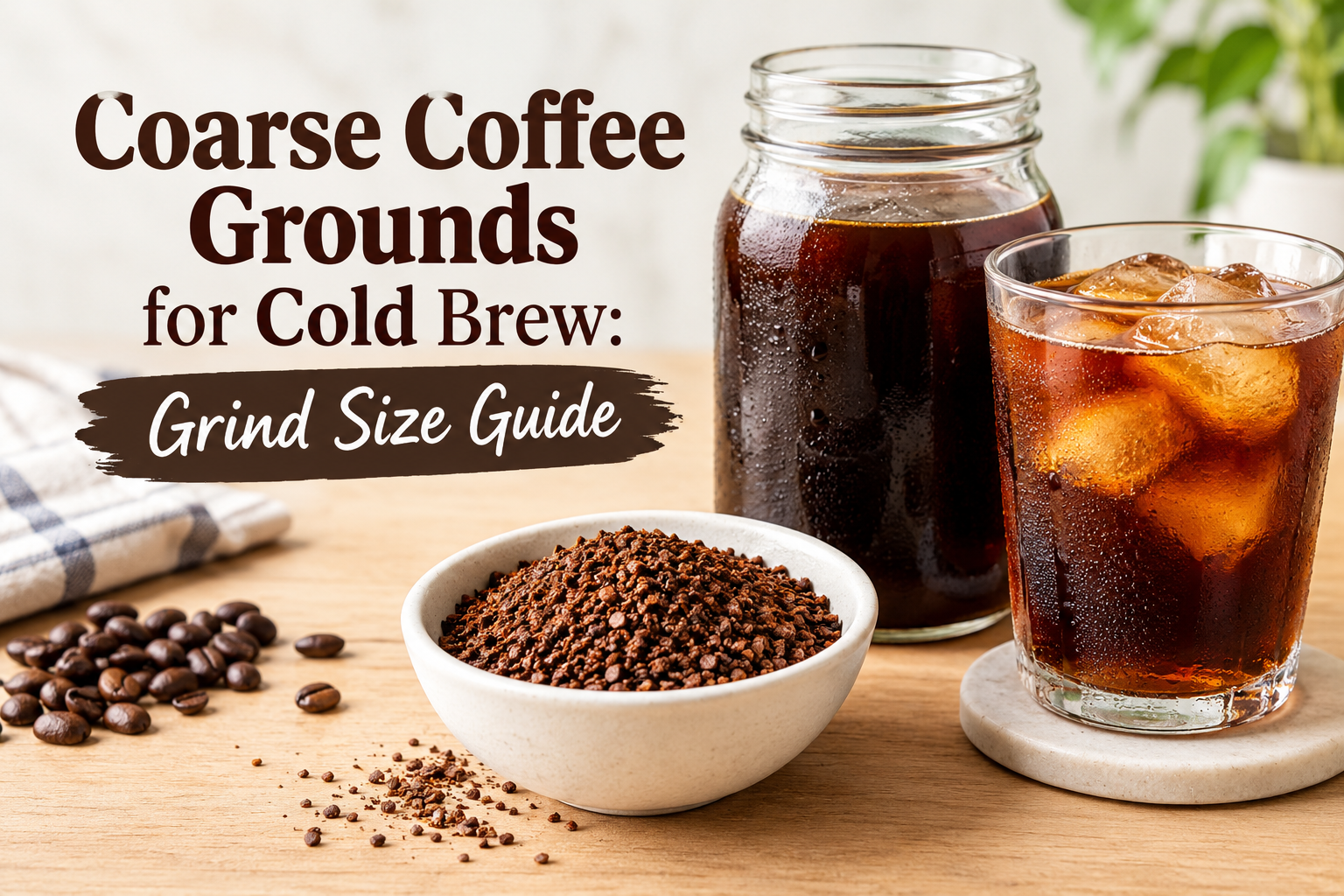
Use a coarse grind for cold brew. The grounds should look like coarse sea salt or coarse breadcrumbs, about the same size as a French press grind. This size steeps evenly over 12 to 18 hours, tastes smooth, and strains cleanly.
If you’ve wondered what grind for cold brew to buy, or why your batch tastes bitter or muddy, grind size is the first thing to check. Below you’ll find what “coarse” looks like, how to set your grinder, and how to fix common problems.
Why Coarse Grounds Work Best for Cold Brew
Cold brew steeps for many hours in cold water. Cold water extracts flavor slowly, so the coffee has a long time to give up its flavor.
Coarse grounds suit that long steep for three reasons:
A medium or fine grind isn’t wrong in every case. But it speeds up extraction, which is the opposite of what a long, cold steep needs.
What Does a Coarse Grind Look Like?
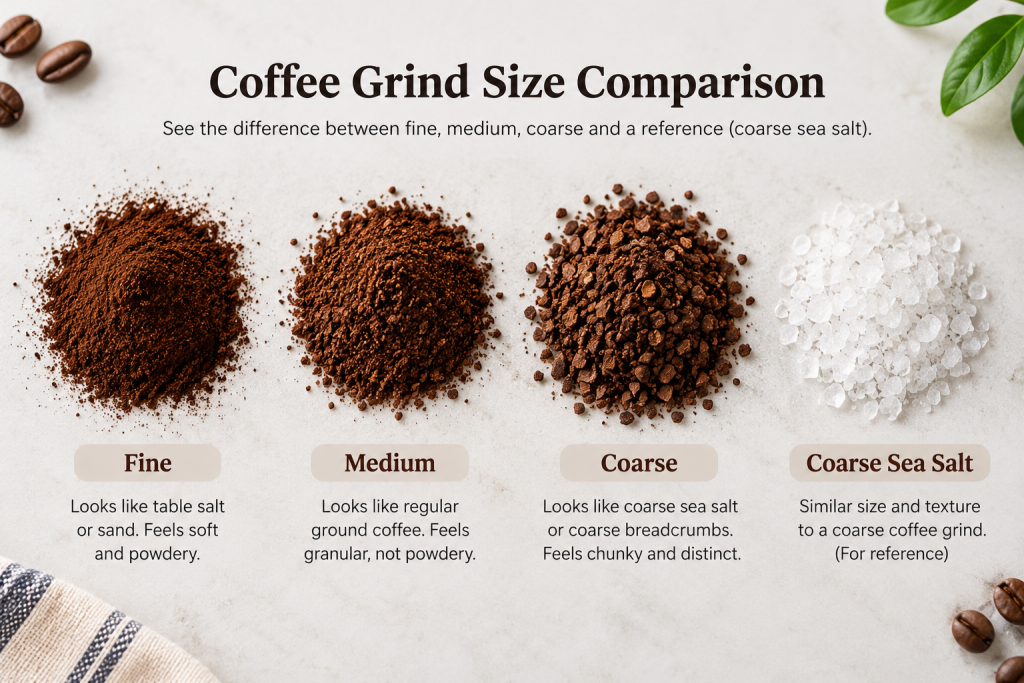
A coarse cold brew grind has visible, separate pieces. Rub a pinch between your fingers. It should feel rough and chunky, not powdery.
Compare it to familiar things:
Grind Size Chart by Brewing Method
Here is how cold brew compares with other methods:
| Brewing method | Typical grind size |
|---|---|
| Espresso | Fine |
| Drip coffee maker | Medium |
| Pour over | Medium to medium-coarse |
| French press | Coarse |
| Cold brew | Coarse to extra coarse |
Cold brew sits at the coarse end, alongside French press. Some people go slightly coarser than French press, especially for steeps of 18 hours or more. If you’re unsure, start at your French press setting.
How to Set Your Grinder for Cold Brew
Grinder numbers differ from brand to brand, so no single number works for every machine. Use this process instead.
- Start with the coarsest setting that still grinds evenly. For many burr grinders, that’s near the top of the range.
- Check the grounds. They should look chunky and fairly even.
- Brew a small test batch. Taste it. Then adjust one step at a time.
- Write down your setting. Next time, you’ll know where to start.
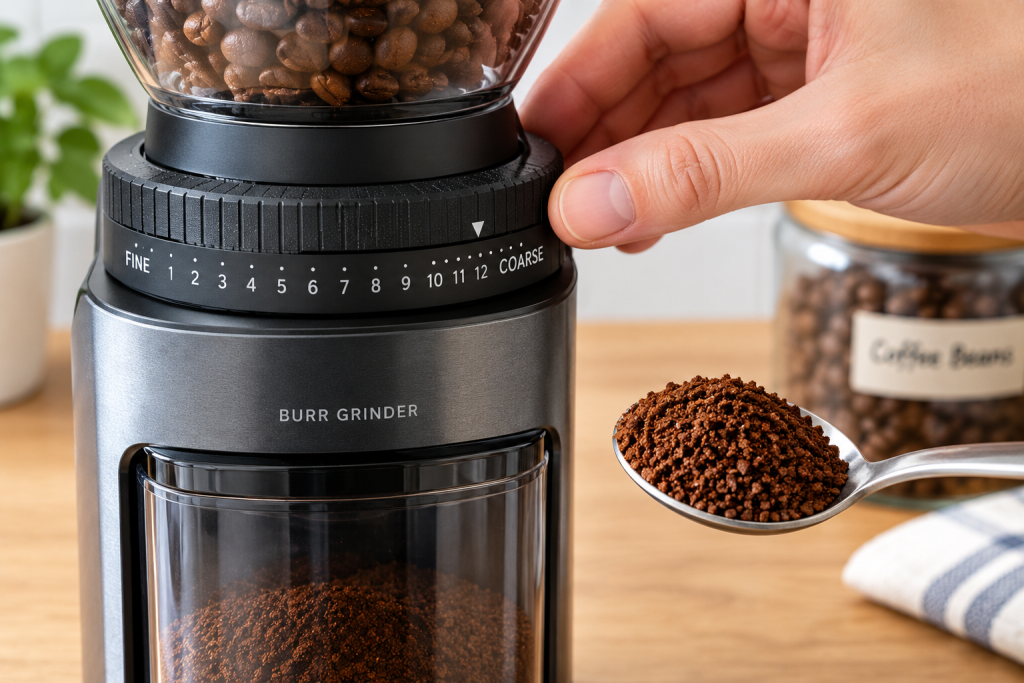
Burr vs. blade grinders: Burr grinders crush beans to a more even size. Blade grinders chop unevenly, leaving both dust and large chunks. If you use a blade grinder, grind in short pulses and shake the grinder between pulses. Then sift out the dust if you can. Fine dust is what makes cold brew bitter and cloudy.
Can You Use Pre-Ground Coffee for Cold Brew?
Yes, but check the label. Look for bags marked “coarse,” “French press,” or “cold brew.” Standard pre-ground coffee is usually made for drip machines. It’s a medium grind, and it can make a bitter, silty cold brew.
Pre-ground coffee also loses flavor faster than whole beans. If you can, buy whole beans and grind them right before brewing. Ask the store to grind them coarse if you don’t own a grinder. Many stores will do it for you.
Starting Ratio and Steep Time
Grind size works together with ratio and time. For a coarse grind, these are good starting points:
These are starting points, not fixed rules. Adjust them to your taste. For a step-by-step method, see our full cold brew concentrate recipe.
Fixing Cold Brew Problems Caused by Grind Size
Match your symptom to the likely fix.
Bitter, harsh, or muddy The grind is probably too fine, or the steep is too long. Grind coarser. If it’s still bitter, shorten the steep by a few hours.
Cloudy or gritty Fine particles are getting through your filter. Grind coarser, then strain through a paper filter or cheesecloth after the first straining.
Weak, thin, or sour The grind may be too coarse, or the steep too short. Grind a notch finer, use more coffee, or steep a few hours longer. Change one thing at a time so you know what worked.
Slow to strain Fine dust clogs filters. Sift out the dust, or grind a little coarser. A clogged filter is usually a sign of too many fine particles.
Does Roast Level Change the Best Grind?
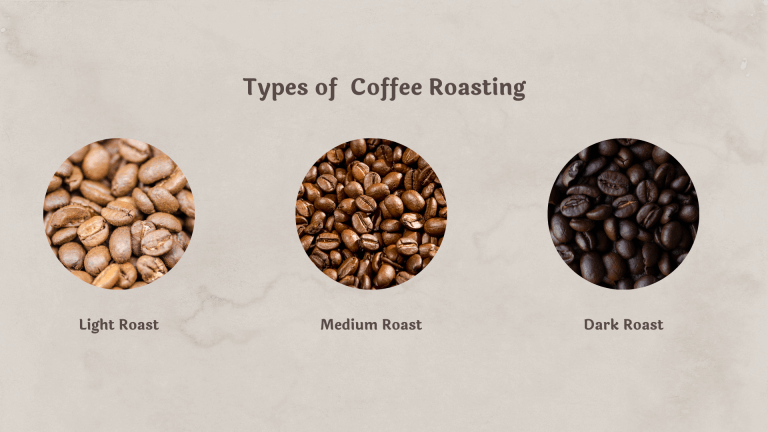
Not much. Coarse works well for light, medium, and dark roasts. Roast level changes flavor more than grind needs. Dark roasts tend to taste bolder and more bitter, so they have less room for error. If you use a dark roast and it tastes harsh, try a slightly coarser grind first.
Frequently Asked Questions
Q01. Can I use a medium grind for cold brew? You can, but results are often more bitter and cloudy. If you do, shorten the steep and strain well. Coarse is the safer choice.
Q02. Is French press grind the same as cold brew grind? They’re close. French press is a good starting point for cold brew. Some brewers go a little coarser for longer steeps.
Q03. Do I need to grind my own beans? No, but it helps. Whole beans stay fresh longer, and you control the grind size. If you buy pre-ground coffee, choose a coarse grind.
Q04. Does a coarser grind need more coffee? Often, yes. Coarse grounds extract less, so a slightly higher coffee-to-water ratio can keep the flavor from tasting thin.