
Standing at a café counter, you see two similar espresso drinks: cappuccino and flat white. Both use espresso and milk. Yet each offers a distinct texture and flavor.
A cappuccino balances equal parts espresso, steamed milk, and thick foam. The foam adds airiness and lightness. A flat white pairs a double shot of espresso with smooth microfoam. This yields a richer coffee flavor and a silky texture.
Next, you’ll discover how these drinks differ in origin, preparation, and flavor. By the end, you’ll know which one suits your morning routine.
What Makes a Cappuccino Unique
The cappuccino ranks as Italy’s most popular coffee export. This classic drink uses a simple 1:1:1 ratio. You get equal parts espresso, steamed milk, and milk foam. What sets it apart is that thick foam layer sitting on top, usually about one centimeter deep.
When you order a cappuccino, you’re getting a recipe perfected over decades. The foam isn’t just decoration. It changes how the coffee tastes and feels in your mouth. That airy, thick foam creates a texture you won’t find in other milk drinks.
Key Cappuccino Features:
- Traditional 6-8 ounce serving size
- Milk heated to 75°C for optimal foam
- Dense, dry foam layer on top
- Equal ratio of all three components
- Strong espresso flavor balanced with creamy milk
The smaller serving size gives you a concentrated coffee experience. You taste bold espresso first, then creamy steamed milk, followed by light foam. Each sip offers a distinct texture and flavor.
Many Italian cafés still dust cappuccinos with cocoa powder or cinnamon. This isn’t just for looks. It’s part of the traditional cappuccino experience that goes back generations. The spice adds a subtle warmth that complements the coffee’s natural flavors.

Visual breakdown of cappuccino’s three equal layers
What really makes cappuccinos special is that contrast. The substantial espresso cuts through the milk. The thick foam adds lightness. Together, they create a drink that’s both bold and smooth.
Understanding the Flat White
A flat white offers a smooth, coffee-forward experience. It first appeared in Australia or New Zealand in the 1980s. Baristas created it for drinkers who wanted more body than a latte but less foam than a cappuccino.
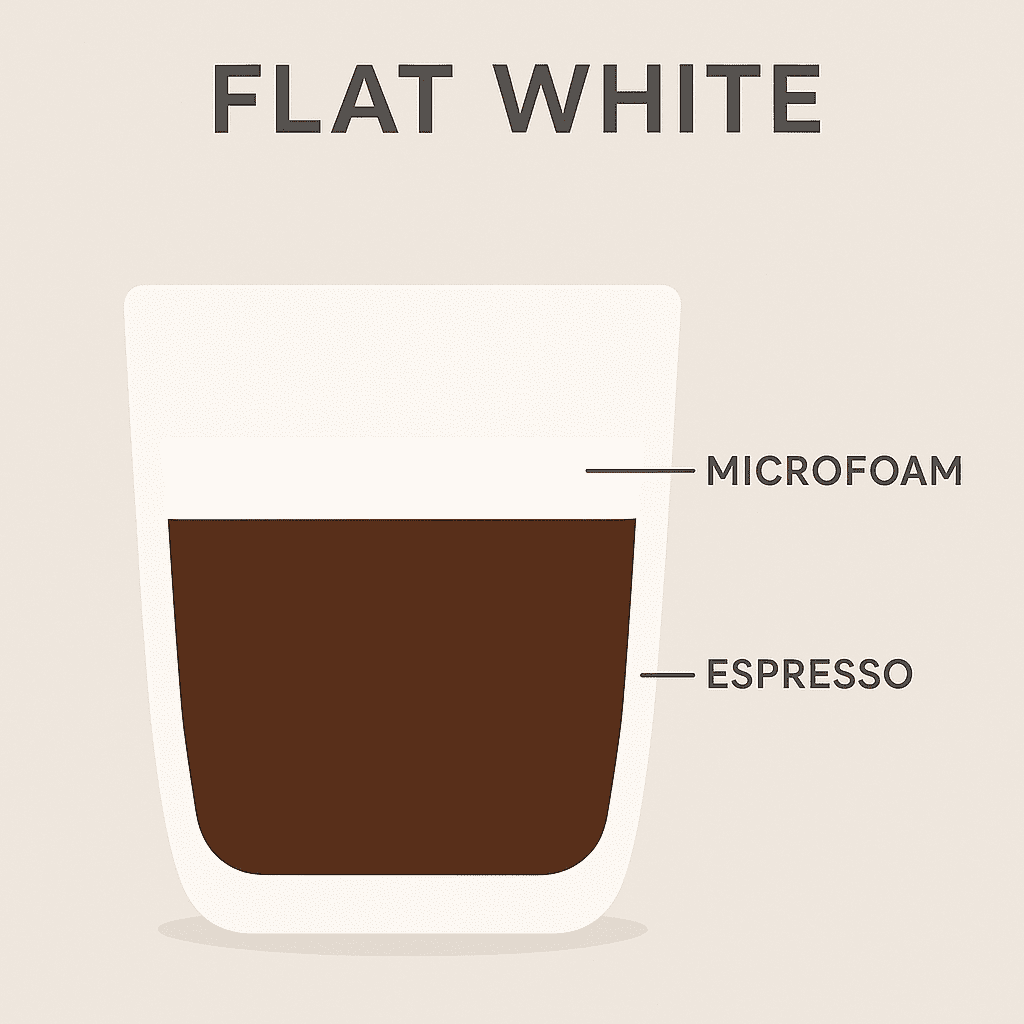
Visual breakdown of flat white’s coffee-forward composition
Flat whites use microfoam—silky milk with tiny air bubbles. This microfoam blends completely with the espresso. The result feels like “liquid velvet.” Unlike a cappuccino’s thick foam, a flat white’s foam layer is minimal—about 0.5 cm—so the top stays flat.
Key Flat White Features:
- Double shot of espresso or ristretto
- Milk-to-coffee ratio around 1:3
- Microfoam steamed to 60–65 °C
- Minimal foam layer for a “flat” look
- Served in 5–6 oz cups
The stronger espresso base and higher coffee-to-water ratio allow the coffee flavor to shine through. Steaming milk to a lower temperature preserves that silky texture and avoids a burnt taste. The small cup size will enable flavors to remain concentrated. This balance of bold espresso and smooth microfoam is what makes the flat white so beloved.
Cappuccino vs Flat White: Key Differences
Both cappuccinos and flat whites start with espresso and milk. Yet they differ in texture, strength, temperature, origins, and caffeine content. Use this comparison to pick the drink that suits you best.
|
Characteristic
|
Cappuccino
|
Flat White
|
|---|---|---|
|
Milk Texture |
Thick, fluffy foam |
Silky micro-foam |
|
Espresso Ratio |
1 part espresso |
2 parts espresso |
|
Milk Ratio |
1 part steamed milk |
1 part steamed milk |
|
Foam Thickness |
~1 cm |
~0.5 cm |
|
Serving Temperature |
~75 °C |
60–65 °C |
|
Cup Size |
6–8 oz |
5–6 oz |
|
Flavor Balance |
Balanced espresso and milk |
Coffee-forward |
Key points to consider when ordering:
- Texture matters more than foam thickness alone
- Flat whites use double shots for a stronger coffee flavor
- Cappuccinos heat milk hotter for firmer foam
- Origins reflect cultural drinking times and habits
- Flat whites deliver more caffeine per cup
With these differences in mind, you can choose the drink that fits your taste, daily routine, and caffeine needs.
The Art of Milk Steaming and Foam
Mastering milk steaming is crucial for crafting great cappuccinos and flat whites. The way you add air and heat changes both texture and taste.
Barista Technique for Cappuccinos
For a cappuccino, you want macrofoam—big, dry bubbles that sit on top:
- Keep the steam wand near the milk’s surface
- Introduce lots of air for 1–2 seconds, then submerge the wand
- Aim for a foam about 1 cm thick
- Stop steaming when milk reaches around 75 °C
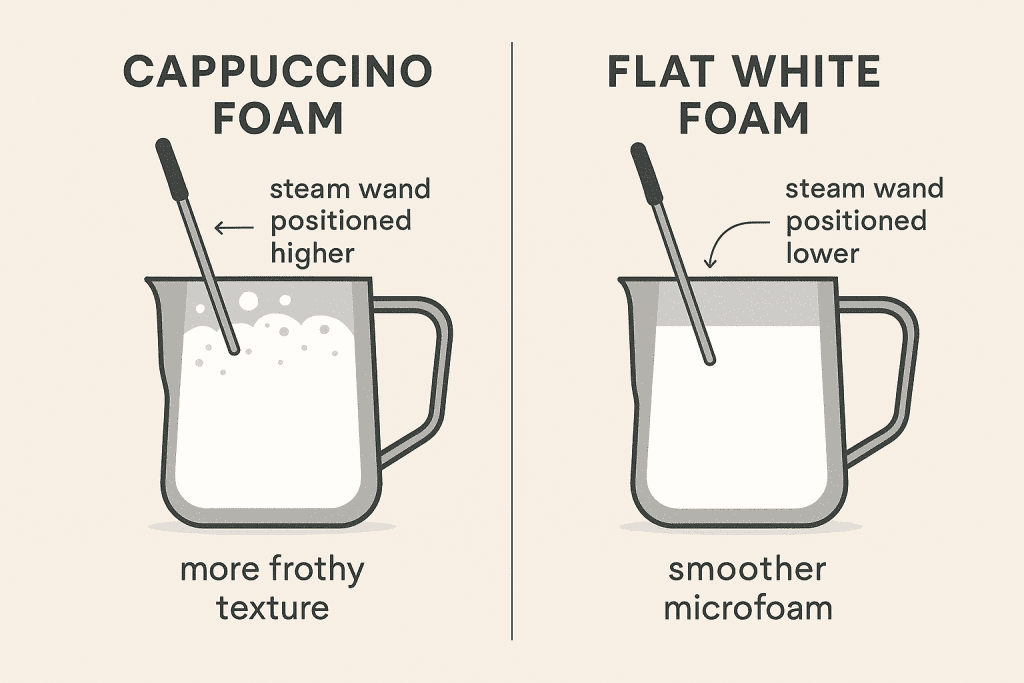
Visual guide to different milk steaming techniques for each drink
Barista Technique for Flat Whites
Flat whites need microfoam—tiny, silky bubbles that merge with the milk:
- Place the steam wand just below the surface
- Keep the wand submerged and tilt the pitcher slightly
- Allow only brief air intake for a barely visible foam
- Steam to a cooler 60–65 °C for velvety texture
Temperature Control
- Never exceed 70 °C to avoid a burnt, sweet taste
- Use your hand on the pitcher to feel when the milk hits 65–70 °C
- Pull the wand once the pitcher is too warm to hold.
Milk Selection and Chemistry
Whole milk (3.8% fat) works best because:
- Proteins stabilize the foam
- Fat adds creaminess
- Phospholipids act as natural surfactants
Understanding these steps helps you see why a cappuccino’s foam feels light and airy, while a flat white’s milk tastes smooth and rich.

Geographic origins of cappuccino and flat white coffee drinks
Origins and Cultural History
Cappuccinos began in early 20th-century Italy. The name comes from Capuchin monks whose brown robes matched the drink’s color. When espresso machines arrived in the 1930s, baristas perfected the recipe. Today, Italians still follow strict rules: cappuccinos only before 11 AM, never with meals, and served in 125 ml cups with 25 ml of espresso.
Flat whites emerged in the 1980s in Australia. Australia credits Sydney’s Moors Espresso Bar in 1985. New Zealand points to Wellington’s Fraser McInnes in 1989. Both versions aimed to cut back on foamy cappuccinos. European café owners and locals blended their coffee styles to create this smoother drink.
These stories show how coffee reflects culture. In Italy, coffee time is a cherished morning ritual. In Australia and New Zealand, coffee adapts to local tastes all day long. Each drink carries a piece of its home country’s coffee traditions.
Caffeine and Nutrition: How They Compare
A flat white packs more caffeine and nutrients than a cappuccino, thanks to its double shot and higher milk volume.
|
Nutrient
|
Cappuccino
|
Flat White
|
|---|---|---|
|
Caffeine |
64–128 mg per cup |
128–154 mg per cup |
|
Calories |
60–160 kcal |
95–280 kcal |
|
Protein |
5–8 g |
8–10 g |
|
Fat |
3–6 g |
6–12 g |
Key points to note:
Caffeine
- Cappuccinos use one or two espresso shots
- Flat whites always use two shots for a more decisive kick
Calories
- Flat whites have more milk, so they tend to have higher calories
- Foam reduces overall calories
Protein and Fat
- More milk means more protein and fat in flat whites
- Choose skim milk to cut fat and calories in either drink
These differences matter if you track your caffeine, calories, or macros each morning.
Which Coffee Drink Should You Choose
Your drink choice comes down to flavor, texture, and timing.
If you want a bold, coffee-forward taste, go for a flat white. Its thin layer of microfoam lets the espresso shine, making it ideal for coffee purists.
If you prefer a balanced, creamy experience, choose a cappuccino. The thick foam and equal parts espresso and milk offer a comforting contrast in every sip.
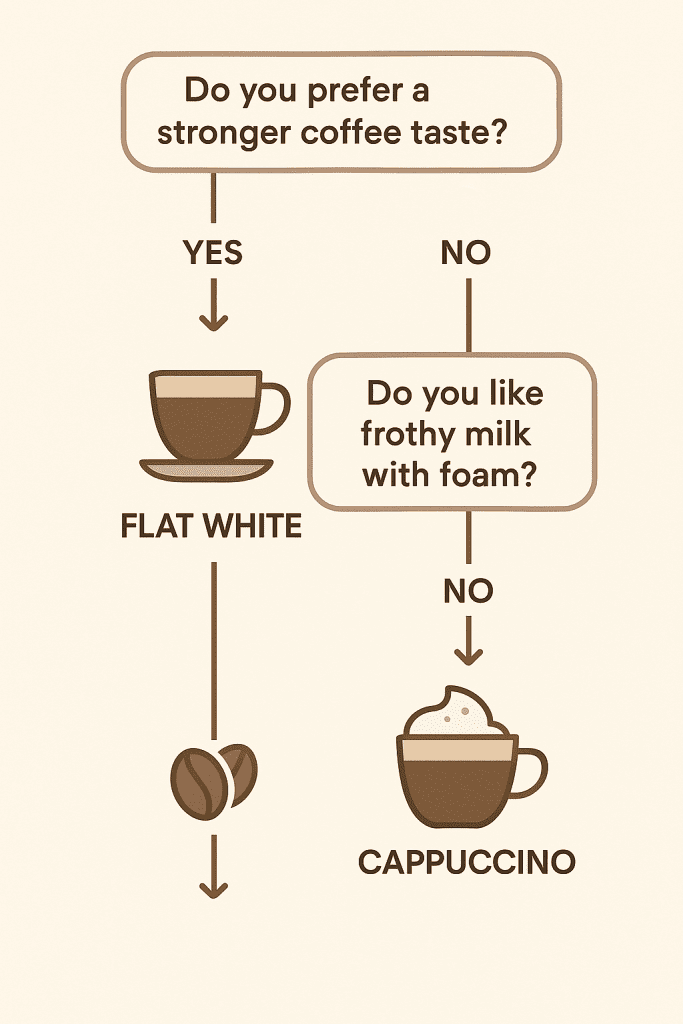
Decision guide for choosing between cappuccino and flat white
Consider these factors when deciding:
- Flavor intensity
– Flat white for strong espresso notes
– Cappuccino for a milder, balanced taste
- Texture preference
– Flat white for smooth, velvety microfoam
– Cappuccino for fluffy, spoonable foam
- Caffeine needs
– Flat white for a consistent high dose (128–154mg)
– Cappuccino for a variable dose (64–128mg)
- Time of day
– Cappuccinos pair best with mornings
– Flat whites work any time
- Barista skill level
– Flat whites need a precise steaming technique
– Cappuccinos are easier to get right almost anywhere
Match your taste, routine, and café’s expertise to enjoy your perfect espresso drink.
How to Order and What to Expect
Ordering the right espresso drink helps you enjoy it fully. Here’s how to ask and what you’ll get.
Ordering Tips
- Specify size
– Say “small flat white” for the classic 5–6 oz
– Ask for your preferred size if menus list extensive options
- Customize cappuccino foam
– “Dry cappuccino” for extra foam
– “Wet cappuccino” for less foam
- Check quality indicators
– Flat white surface should look glossy, like wet paint
– Cappuccino foam should be fine-textured and stable
- Be clear about milk temperature.
– Ask if they steam to 60–65 °C for flat whites
– Confirm 75 °C for a traditional cappuccino
What to Expect
- Size and ratio
– Flat white: small cup, high espresso-to-milk ratio
– Cappuccino: medium cup, equal parts espresso, milk, foam - Texture and appearance
– Flat white: thin microfoam, smooth top
– Cappuccino: thick foam layer, spoonable - Flavor profile
– Flat white: strong coffee taste
– Cappuccino: balanced espresso and creamy milk - Price point
– Flat whites often cost 50 ¢–$1 more due to double shots and skill - Regional style
– Australian cafés excel at flat whites
– Italian cafés stick to strict cappuccino traditions
Coffee Shop Variations
- Chains vs. specialty shops
– Chains may use bulk steaming methods
– Specialty shops focus on precise foam and temperature
- Local expertise
– Ask baristas about their steam temperature and foam technique
– Inquire how they distinguish a cappuccino vs. flat white
By knowing these details, you’ll order confidently and appreciate the craftsmanship behind each cup. Enjoy exploring the subtle art and rich traditions of cappuccinos and flat whites.
Conclusion
Choosing between a cappuccino and a flat white comes down to texture, flavor, and ritual. If you crave a balanced, creamy cup with a fluffy foam layer, the cappuccino’s precise 1:1:1 ratio and thicker foam deliver a comforting experience—best enjoyed in the morning. If you prefer a coffee-forward drink with a velvety microfoam and a more decisive espresso kick, the flat white’s higher coffee-to-milk ratio and sleek appearance will satisfy your taste anytime. Experiment with sizes, foam levels, and milk temperatures at different cafés to find the perfect match for your palate.