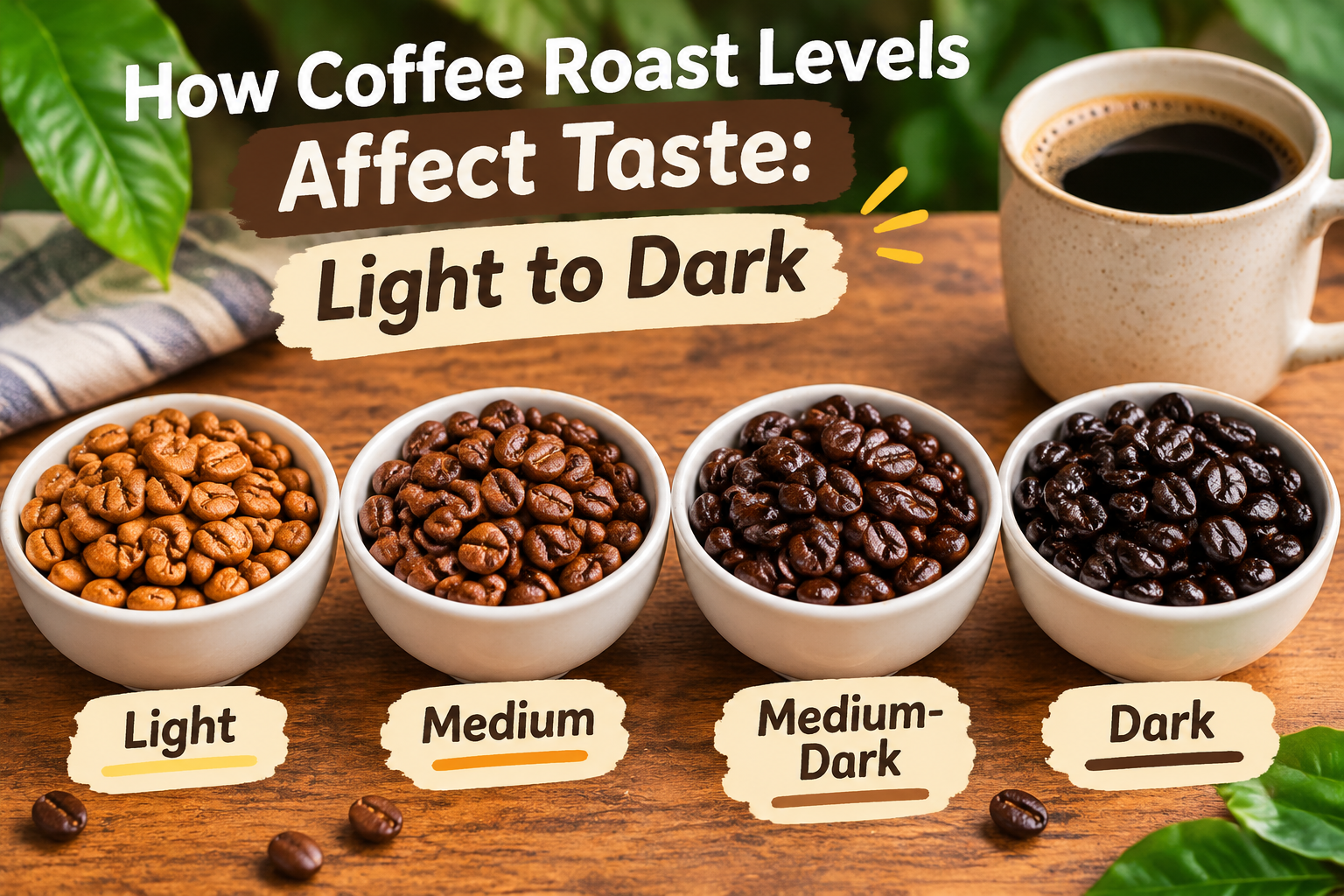
Roast level changes how coffee tastes more than most people expect. Light roasts taste brighter, fruitier, and more acidic. Dark roasts taste bolder, more bitter, and more smoky or chocolatey. Medium roasts sit in the middle with a balanced, rounded flavor.
This guide explains why that happens, what each roast level tastes like, and how to pick and brew the roast that suits your taste.
Why Roast Level Changes Flavor
Green coffee beans have little of the flavor you know. Roasting creates it. Heat triggers chemical reactions that brown the bean, build aroma, and break down acids.
As roasting continues, three things happen:
Roasters often describe the stages by “cracks.” Beans make a popping sound called first crack, and a second one later in the roast. Light roasts end around first crack. Dark roasts reach or pass second crack. The exact temperatures vary by roaster and bean.
Roast Levels at a Glance
Roast names are not standardized. One brand’s “medium” may be another’s “medium-dark.” Use this table as a general guide and check the flavor notes on the bag.
| Roast level | Bean color | Typical taste | Acidity | Body |
|---|---|---|---|---|
| Light | Light brown, dry surface | Bright, fruity, floral, tea-like | High | Light |
| Medium | Medium brown, mostly dry | Balanced, caramel, nutty, mild fruit | Medium | Medium |
| Medium-dark | Dark brown, slight oil | Rich, chocolate, toasted sugar | Low to medium | Full |
| Dark | Very dark, often oily | Bold, smoky, bittersweet, roasty | Low | Heavy |
Light Roast Taste
Light roasts keep the most flavor from the bean’s origin. You may notice citrus, berries, stone fruit, or flowers. The coffee can taste sharp or sour if you are used to darker cups.
Light roasts shine as black coffee. They are denser and harder to extract, so weak or sour results are common if the brew is too cool or too coarse.
Medium Roast Taste
Medium roasts balance origin flavor with roast flavor. Expect caramel, milk chocolate, nuts, and softer fruit. Acidity is present but gentle.
This is a safe pick if you are unsure. It works in drip machines, pour-over, and French press. It also holds up with milk.
Medium-Dark and Dark Roast Taste
Medium-dark roasts add deeper chocolate and toasted sugar notes. Dark roasts go further into smoky, bittersweet, and sometimes burnt territory.
Dark roasts lose most origin character. In return you get a heavy body and low acidity. That is why they are popular for espresso, lattes, and cold drinks with milk or sugar. If a dark roast tastes harsh or ashy, it may be roasted too far, or brewed too hot or too long.
Do Dark Roasts Have More Caffeine?
No. This is a common myth. Roasting changes the bean’s weight and size, but it barely changes caffeine. By weight, light and dark roasts contain about the same amount.
Your method of measuring can create a small difference:
Caffeine in a cup depends far more on the bean type, dose, and brew method than on roast level. For example, robusta beans contain much more caffeine than arabica. See our guide on arabica vs robusta for details.
How to Brew Each Roast
You can adjust your brew to bring out the best in each roast. Treat these as starting points and tweak them to taste. A common starting ratio is 1 part coffee to 16 parts water by weight, such as 20 g of coffee to 320 g of water (about 0.7 oz to 11 oz).
| Roast level | Water temperature | Grind | Why |
|---|---|---|---|
| Light | 200–205°F (93–96°C) | Slightly finer | Dense beans need more heat and extraction |
| Medium | 195–205°F (90–96°C) | Medium | Balanced beans are forgiving |
| Dark | 190–200°F (88–93°C) | Slightly coarser | Brittle beans extract fast and turn bitter |
If your coffee tastes sour: It is likely under-extracted. Grind finer, use hotter water, or brew a little longer.
If your coffee tastes bitter or harsh: It is likely over-extracted. Grind coarser, lower the water temperature, or shorten the brew time.
Change only one variable at a time so you know what made the difference.
How to Choose a Roast
Pick based on how you drink your coffee and what flavors you enjoy.
Also check the roast date. Fresher beans taste better at any roast level. Try beans within a few weeks of roasting for the best flavor. For more on where flavors come from, read our coffee origins guide.
Frequently Asked Questions
Which roast level is the strongest?
“Strong” can mean flavor intensity or caffeine. Dark roasts taste bolder, but caffeine stays about the same across roasts when measured by weight.
Is light roast more acidic than dark roast?
Light roasts taste more acidic because roasting breaks down acids over time. That is about flavor, not pH alone. Dark roasts taste smoother and less tangy.
What roast is best for espresso?
Medium-dark and dark roasts are traditional for espresso. Many modern roasters also make light espresso roasts, which taste fruitier and need careful dialing in.
Why does my dark roast taste burnt?
It may be roasted too far, stale, or brewed with water that is too hot. Try cooler water and a coarser grind.
Does roast level change coffee’s health effects?
Don’t rely on roast level for health goals. Research here is mixed, so talk to a healthcare professional if you have specific concerns.