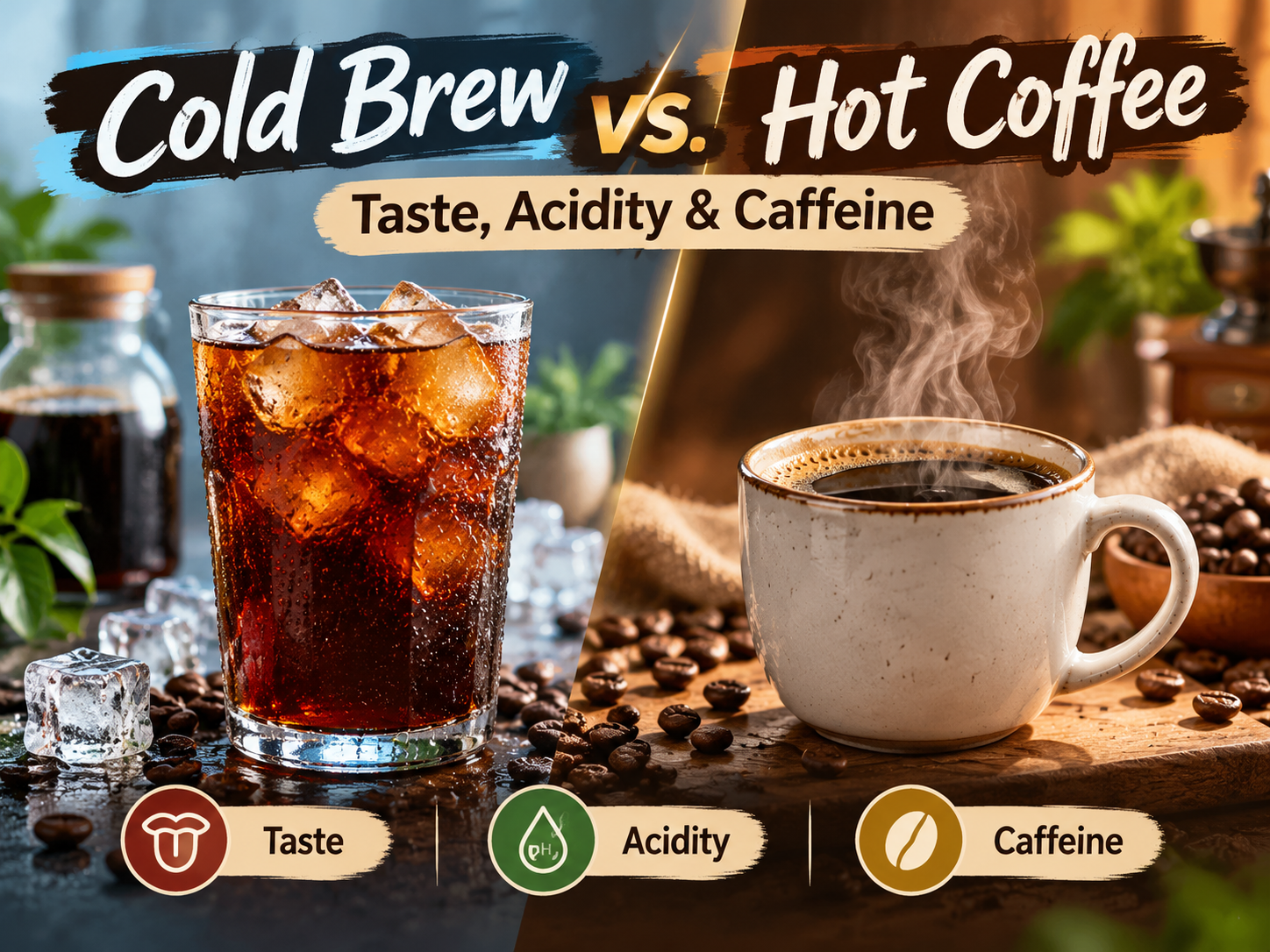
Cold brew vs hot coffee comes down to more than serving temperature. The brewing method changes how coffee tastes, how long it takes to prepare, and which compounds end up in your cup. Cold brew is often smooth and mellow, while hot-brewed coffee tends to offer brighter aromas and more noticeable flavor differences between beans.
Neither method is automatically stronger, healthier, or better. Your preferred option depends on your taste, brewing routine, and how much caffeine you want. This guide compares cold brew and hot coffee by flavor, acidity, caffeine content, preparation time, and everyday convenience so you can choose the right method for your needs.
What Is the Difference Between Cold Brew and Hot Coffee?
The main difference is the temperature of the water used during extraction. Cold brew steeps coffee grounds in cool or room-temperature water for several hours. Hot coffee uses heated water to extract flavor from the grounds within minutes.
Cold brew is not simply hot coffee that has been chilled. Because water temperature and brewing time affect extraction, the finished drinks can have noticeably different flavors and chemical compositions. Research published in Scientific Reports examined these differences across coffees from six growing regions.
The comparison below assumes regular brewed coffee rather than espresso-based drinks or unusually concentrated cold brew.
| Feature | Cold Brew | Hot Coffee |
|---|---|---|
| Brewing method | Grounds steep in cool water | Grounds contact hot water |
| Typical brewing time | Around 12–24 hours | Usually a few minutes |
| Flavor | Often smooth, mellow, and chocolatey | Often aromatic, bright, and complex |
| Perceived acidity | Frequently less sharp or tangy | Often more pronounced |
| Caffeine | Depends on concentration and serving size | Depends on beans, method, and serving size |
| Equipment | Jar or cold brew maker and filter | Dripper, coffee maker, or French press |
| Best for | Make-ahead drinks and chilled coffee | Freshly brewed coffee and quick preparation |
These are general tendencies, not fixed rules. Bean variety, roast level, grind size, coffee-to-water ratio, and brewing time can all change the result.
Cold Brew vs. Hot Coffee: Which Tastes Better?
Taste is one of the clearest differences between the two brewing methods. Cold brew often tastes mellow and rounded, while hot coffee can deliver a more aromatic and lively cup.
However, neither method produces one universal flavor profile. The beans and roast you choose matter just as much.
Cold brew: Smooth and mellow
Cold brew often appeals to people who prefer a less sharp coffee flavor. Depending on the beans, you may notice chocolate, caramel, nutty, or naturally sweet-tasting notes.
Its flavor can be particularly enjoyable when served over ice or mixed with milk. Some cold brews also have a fuller mouthfeel, although that depends on the recipe and filtration method.
Cold brew is worth trying if you:
Hot coffee: Aromatic and expressive
Hot water extracts coffee compounds quickly and helps release aromatic compounds that contribute to the smell of freshly brewed coffee.
Depending on the beans and preparation, hot coffee may reveal fruity, floral, citrus-like, nutty, or roasted notes. These qualities can be especially noticeable with lighter roasts and carefully controlled brewing methods.
Hot coffee is a good choice if you:
Which tastes better? Choose cold brew for a mellow, chilled drink and hot coffee when you want a fresh, aromatic cup. If you are unsure, try the same beans using both methods before choosing a favorite.
Is Cold Brew Less Acidic Than Hot Coffee?
Cold brew is commonly described as less acidic than hot coffee, but the science requires a little more explanation.
Coffee acidity has two related but different meanings: its measured pH and its titratable acidity. Understanding the distinction helps explain why two coffees can taste different even when their pH measurements are similar.
What research says about coffee acidity
A 2018 study by Rao and Fuller compared cold and hot brews made from light-to-medium roast coffees sourced from six regions.
The researchers found that the samples had comparable pH values, ranging from 4.85 to 5.13. However, the hot-brewed samples generally had higher titratable acidity than their cold-brewed counterparts.
A later study published in 2023 found that brewing conditions and the coffee-to-water ratio can also affect acidity measurements. In that experiment, the cold brew had higher titratable acidity than the hot brew, illustrating why the result cannot be generalized across every recipe.
Here is what the terms mean:
These measurements do not always move together. A coffee with similar pH to another coffee can still taste noticeably different.
Which coffee should you choose if you dislike sharp flavors?
Cold brew is a reasonable starting point if you prefer coffee with less noticeable sharpness. However, brewing method is only one factor.
Bean origin, roast level, extraction, and serving temperature also affect the flavor. Try a different roast or recipe if your usual coffee tastes too sharp.
One important limitation: a smoother taste does not establish that cold brew will prevent heartburn or other digestive symptoms. Individual responses vary, and coffee can trigger symptoms in some people regardless of brewing method.
Does Cold Brew Have More Caffeine Than Hot Coffee?
Cold brew can contain more caffeine than hot coffee, but it is not always the more caffeinated option.
The main factors are the amount of coffee used, the water ratio, extraction conditions, final serving size, and whether the drink is concentrated or diluted.
For a reference point, Mayo Clinic lists approximately 96 milligrams of caffeine in an 8-fluid-ounce (237 mL) serving of regular brewed coffee. Actual amounts vary with the beans and preparation method.
Cold brew has no single standard caffeine value. A concentrated preparation can deliver substantially more caffeine per ounce than a diluted drink, while a weaker cold brew may contain less caffeine than a strong hot coffee.
What affects caffeine content?
Coffee-to-water ratio: Using more grounds relative to water can increase the concentration of the finished beverage.
Serving size: A large coffee can deliver more total caffeine even when it tastes relatively mild.
Concentrate and dilution: Cold brew concentrate is often mixed with water or milk before drinking. The amount used determines how much caffeine reaches the cup.
Coffee beans and extraction: Bean characteristics, grind size, brewing time, and preparation method influence the final result.
Roast level: Roast can influence extraction and caffeine concentration by weight or volume, but roast color alone is not a dependable way to predict the caffeine in your finished drink.
How can you make a more informed choice?
If you want to manage your caffeine intake, check the nutrition information provided by the café or manufacturer when available. For homemade coffee, keep your measurements and serving sizes consistent.
The U.S. Food and Drug Administration cites 400 milligrams per day as an amount not generally associated with negative effects for most adults. This is not a target or a universal limit for every individual.
The practical takeaway is simple: do not use the name “cold brew” or the drink’s bitterness as a reliable measure of caffeine strength.
Brewing Time, Equipment, and Everyday Convenience
The preparation process may determine which coffee fits your routine better than taste alone.
Making cold brew at home
Cold brew takes longer, but most of that time is passive steeping.
A basic setup requires coarsely ground coffee, cool or room-temperature water, a suitable container, and a filter. Combine the coffee and water, steep for roughly 12–24 hours, and strain out the grounds.
Your preferred ratio will depend on whether you want a ready-to-drink coffee or a concentrate that you dilute later. Start with a recipe designed for your intended serving style, then adjust the strength to taste.
Keep homemade cold brew refrigerated and use a clean container. For storage duration, follow a reliable recipe’s guidance rather than assuming that a long steep or refrigeration makes the beverage safe indefinitely.
Making hot coffee at home
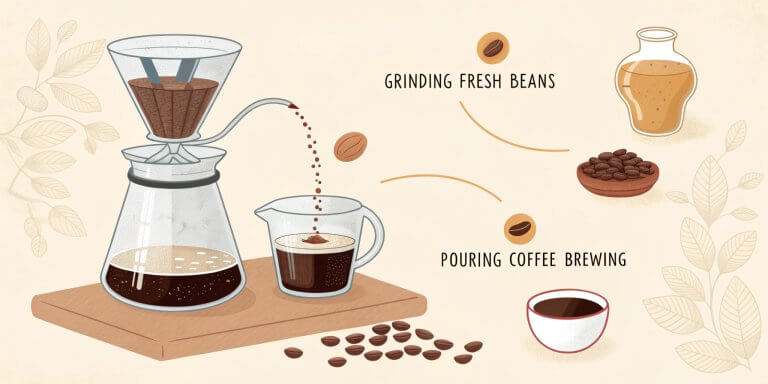
Hot coffee is generally quicker to prepare. Depending on your equipment, you can have a fresh cup in a few minutes.
Common options include:
For a more balanced cup, use an appropriate grind size, measure your coffee and water, and avoid changing several brewing variables at once.
Which is more convenient?
Choose hot coffee if you want a quick drink with minimal planning. Choose cold brew if you prefer preparing a batch ahead of time and having chilled coffee ready when you need it.
Neither requires expensive equipment. Your existing coffee maker may be enough to get started with hot brewing, while a clean jar and suitable filter can be sufficient for basic cold brew.
Which Is Better for Your Coffee Routine?
There is no universal winner in the cold brew vs hot coffee comparison. The best method depends on the qualities you value most.
Use these recommendations as a starting point, then adjust based on your own taste.
| Your preference | A good starting choice | Why |
|---|---|---|
| Smooth, mellow flavor | Cold brew | Often has less noticeable sharpness |
| Fresh coffee aroma | Hot coffee | Hot extraction releases aromatic compounds quickly |
| Quick preparation | Hot coffee | Usually ready within minutes |
| Make-ahead convenience | Cold brew | Can be prepared in batches |
| More control over brewing variables | Either | Both methods allow adjustments to ratio, grind, and time |
| Managing caffeine intake | Either | Measure serving size and check available caffeine information |
| Exploring delicate flavor notes | Hot pour-over | Offers precise control over extraction |
If you enjoy both, there is no reason to commit to one method. You might prefer hot coffee on cooler mornings and cold brew when you want a chilled drink.
For a useful comparison at home, use the same beans for both preparations and taste them without milk or sweetener first. Then add your preferred ingredients to see how they affect each cup. This is a suggested comparison method, not a claim of personal testing.
Frequently Asked Questions
Is cold brew stronger than hot coffee?
Not necessarily. Cold brew can be concentrated, but its strength depends on the coffee-to-water ratio, preparation, dilution, and serving size. Taste alone cannot tell you how much caffeine a drink contains.
Is cold brew less bitter than hot coffee?
Cold brew often tastes smoother and less bitter, although the beans, roast, and extraction conditions matter. Poorly prepared cold brew can still taste harsh, woody, or unpleasant.
Can you heat cold brew coffee?
Yes. You can warm cold brew after it has been prepared. It will have a different flavor from coffee brewed directly with hot water because the extraction process has already taken place.
Is cold brew the same as iced coffee?
No. Cold brew is steeped in cool or room-temperature water over an extended period. Iced coffee is generally brewed with hot water and then chilled or served over ice. Both can be served cold, but they use different brewing methods.
Which is better for daily coffee drinking?
Either can fit into a coffee routine. Consider your preferred taste, serving size, caffeine sensitivity, and preparation habits. If caffeine affects your sleep or makes you feel uncomfortable, consider reducing your intake rather than assuming one brewing method will solve the problem.
Final Verdict: Cold Brew vs. Hot Coffee
Cold brew and hot coffee offer different ways to enjoy the same basic ingredient. Cold brew is often mellow, convenient for batch preparation, and well suited to chilled drinks. Hot coffee is quicker to make and can highlight the aroma and distinctive flavor notes of different beans.
Acidity and caffeine are more complicated than common coffee comparisons suggest. Research shows that brewing conditions influence acidity measurements, while caffeine depends on the recipe and serving size.
Start with the method that suits your taste and schedule. Experiment with your coffee-to-water ratio, roast level, and serving style until you find a cup you enjoy.