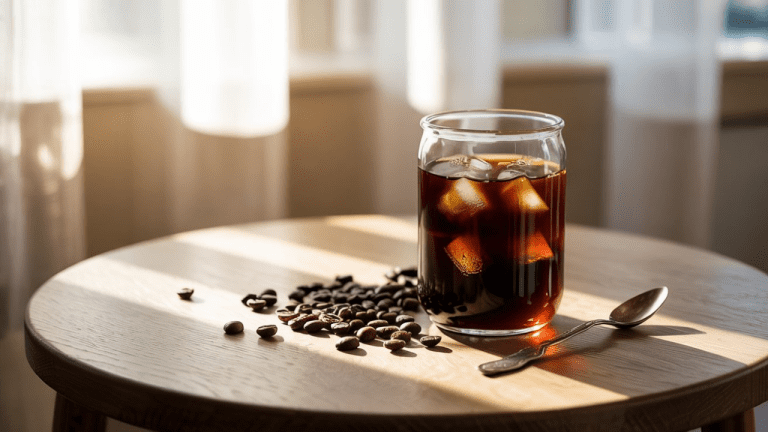
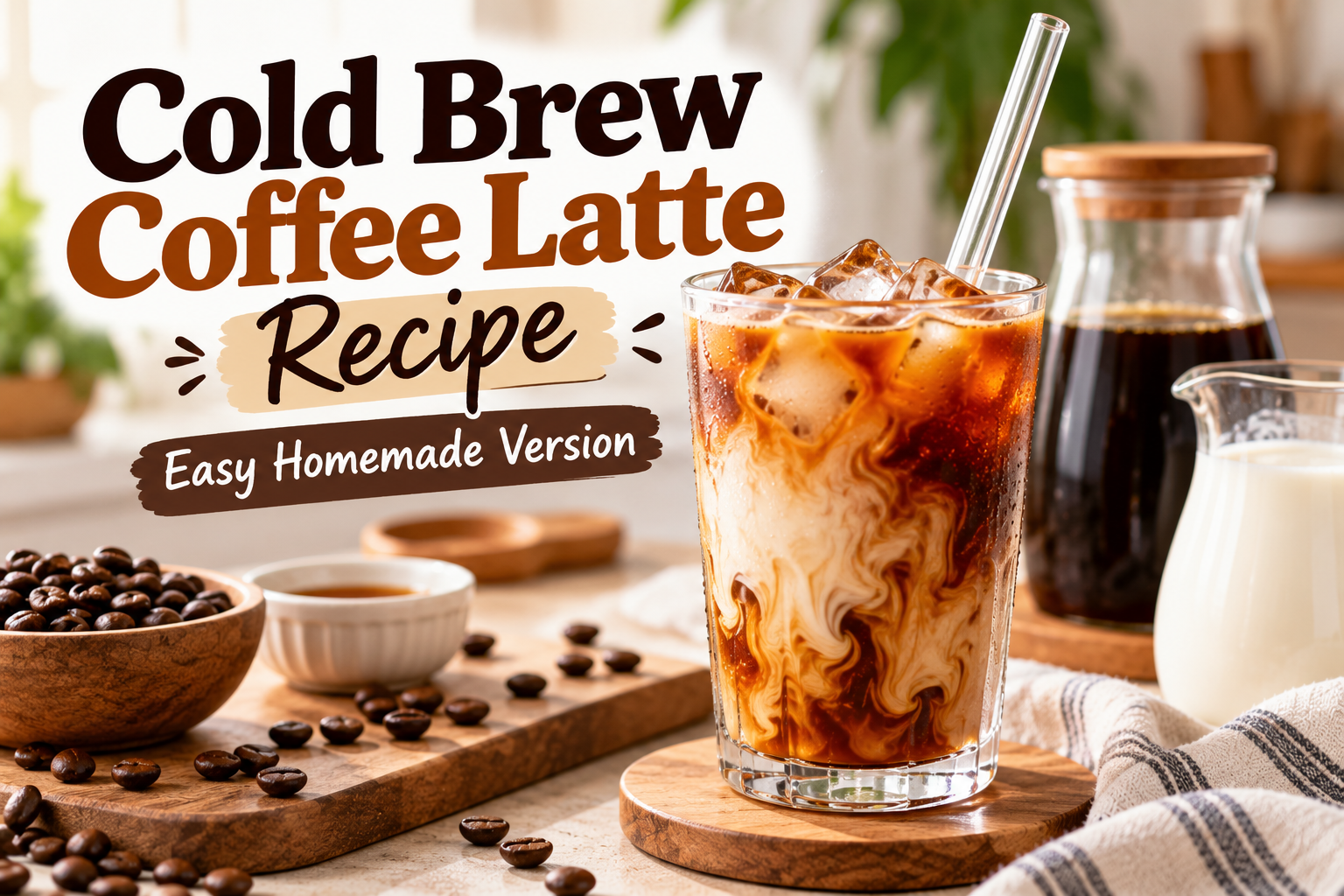
A cold brew coffee latte is a smooth, creamy coffee drink made by combining cold brew concentrate with chilled milk and ice. It’s an easy alternative to a traditional iced latte, and you don’t need an espresso machine to make one at home.
The best part? Once your cold brew is ready, you can prepare this drink in about three minutes using just a few ingredients.
This easy cold brew latte recipe covers the ideal coffee-to-milk ratio, simple preparation steps, dairy-free alternatives, and delicious ways to customize your drink.
What Is a Cold Brew Coffee Latte?
A cold brew latte is a milk-forward coffee drink prepared using cold-brewed coffee instead of espresso.
Cold brew coffee is made by steeping ground coffee in cold or room-temperature water for an extended period, commonly 12–24 hours. After filtering, the coffee can be enjoyed on its own or combined with other ingredients.
Adding a generous portion of milk creates a creamy drink commonly called a cold brew latte.
Unlike a traditional latte, which uses espresso and steamed milk, an iced cold brew latte requires no espresso machine, hot water, or milk steaming.
The result is a refreshing coffee drink with a mellow coffee flavor and creamy texture.
Do Cold Brews Have Milk?
Plain cold brew coffee doesn’t automatically contain milk. Traditional black cold brew is made with just coffee and water.
However, you can add regular milk, oat milk, almond milk, cream, or another dairy alternative to create your preferred drink.
A cold brew latte simply uses milk as one of its main ingredients rather than adding only a small splash.
Ingredients for a Homemade Cold Brew Latte
You only need three main ingredients to prepare this cold brew coffee latte recipe.
The measurements below are suggested starting points for one serving using cold brew concentrate.
| Ingredient | Quantity | Purpose |
|---|---|---|
| Cold brew concentrate | ½ cup (4 fl oz / 120 ml) | Coffee base |
| Cold milk | ½ cup (4 fl oz / 120 ml) | Creamy texture |
| Ice cubes | About 1 cup | Keeps the drink chilled |
| Vanilla or simple syrup | 1–2 teaspoons (optional) | Adds sweetness |
| Cinnamon | A small pinch (optional) | Adds flavor |
Preparation time: 3 minutes, using prepared cold brew.
Servings: 1
Equipment: A tall glass, measuring cup, and spoon.
Which Milk Works Best?
The milk you choose affects the flavor, body, and creaminess of your finished drink.
Whole milk produces a richer texture, while 2% milk gives you a slightly lighter result.
If you prefer dairy-free coffee, consider these options:
- Oat milk: Adds a creamy texture and mild natural sweetness.
- Almond milk: Offers a lighter body and subtle nutty flavor.
- Soy milk: Provides a fuller texture and blends well with coffee.
- Coconut milk beverage: Adds a mild coconut flavor.
Unsweetened milk is a useful starting point because you can control the final sweetness yourself.
For a creamier finish, try chilled barista-style oat milk or froth your preferred milk before adding it.
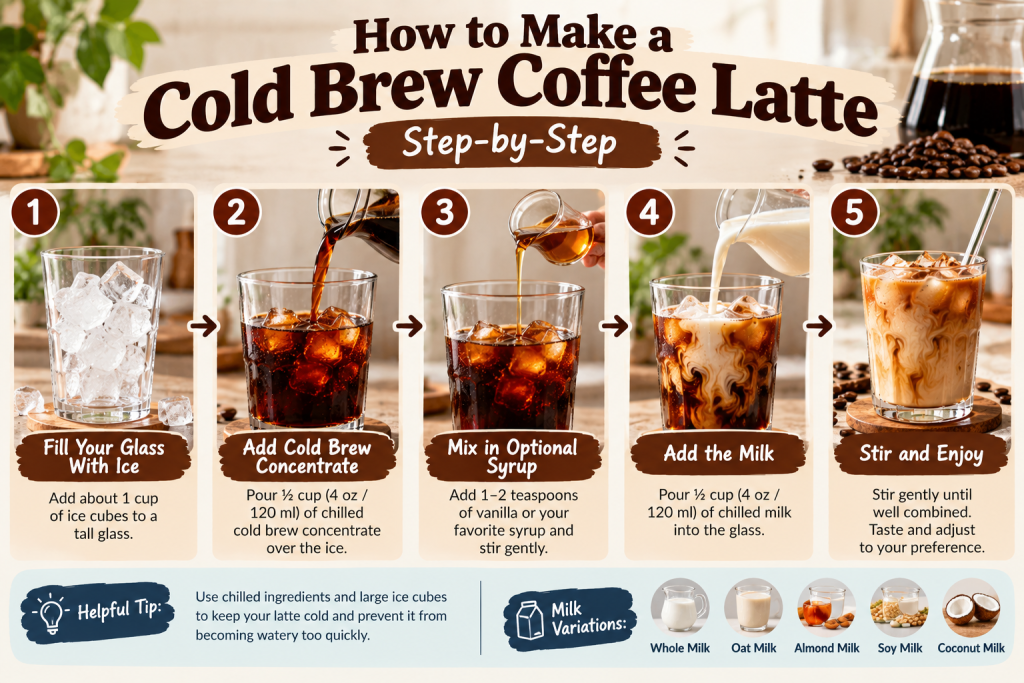
How to Make a Cold Brew Coffee Latte at Home
You don’t need any special barista skills to prepare this drink. The following steps work with homemade or store-bought cold brew concentrate.
Step 1: Prepare Your Cold Brew
Measure ½ cup (120 ml) of chilled cold brew concentrate.
If you’re using a commercial product, read its dilution instructions first. Cold brew concentrates vary in strength, and some may require additional water.
Avoid confusing concentrate with ready-to-drink cold brew. The latter is usually less concentrated and may need a different milk ratio.
Step 2: Fill Your Glass With Ice
Add approximately one cup of ice cubes to a tall serving glass.
Large ice cubes are a useful option because they generally melt more slowly than crushed ice.
For the best starting consistency, use chilled ingredients so your drink doesn’t become watery too quickly.
Step 3: Pour in the Cold Brew
Pour your measured cold brew concentrate over the ice.
If you’re adding vanilla, caramel, or another liquid sweetener, mix it into the coffee now.
Liquid syrups dissolve more easily in cold drinks than regular granulated sugar.
Step 4: Add the Milk
Slowly pour ½ cup (120 ml) of your preferred chilled milk into the glass.
The milk will create attractive swirls as it combines with the dark coffee.
If you enjoy layered coffee drinks, pour the milk slowly and leave the drink unstirred until you’re ready to enjoy it.
Step 5: Stir and Serve
Stir gently until the coffee and milk are evenly combined.
Taste your drink before adding extra sweetener.
If the coffee flavor is too intense, add a little more milk. If it’s too mild, use slightly more concentrate next time.
Your homemade cold brew coffee latte is ready to enjoy!
What Is the Best Cold Brew-to-Milk Ratio?
The ideal ratio depends on whether you’re using cold brew concentrate or ready-to-drink coffee.
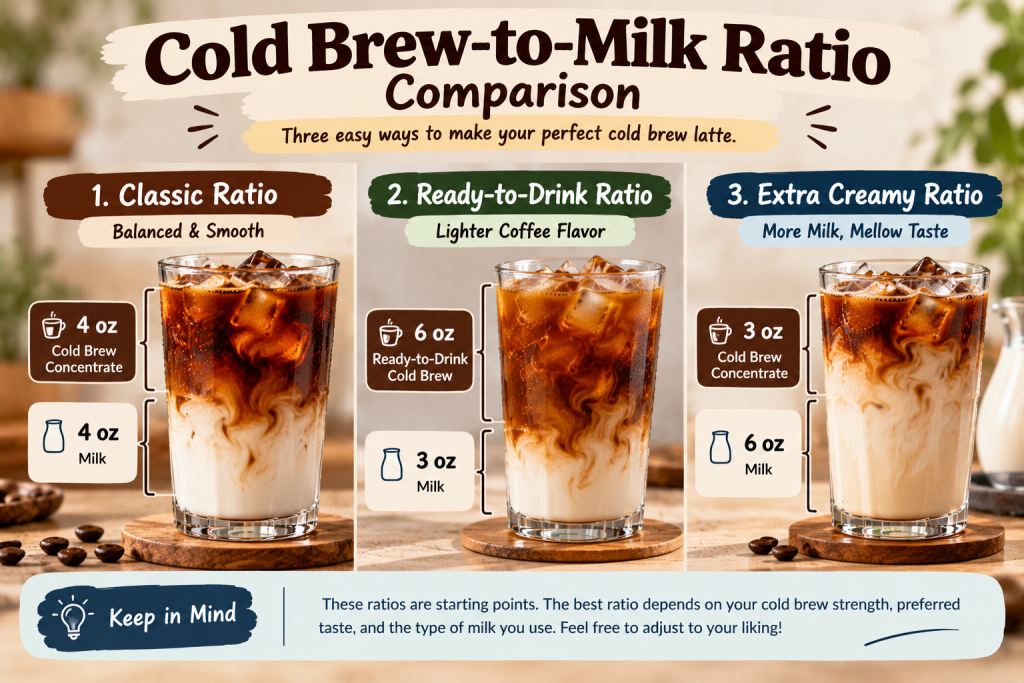
This is an important detail because using the wrong type of cold brew can leave your latte tasting unexpectedly strong or weak.
For a simple homemade latte, start with equal parts cold brew concentrate and milk.
| Coffee Type | Coffee Amount | Milk Amount |
|---|---|---|
| Cold brew concentrate | 4 fl oz | 4 fl oz |
| Ready-to-drink cold brew | 6 fl oz | 3 fl oz |
| Extra-creamy latte using concentrate | 3 fl oz | 6 fl oz |
These measurements are suggested starting points, not universal brewing rules. Concentrate strength varies between recipes and brands.
A useful rule: The stronger your coffee base, the more flexibility you have to add milk without losing its coffee flavor.
Can You Make This Recipe Without Concentrate?
Absolutely.
If you only have regular ready-to-drink cold brew, combine ¾ cup (6 fl oz / 180 ml) of coffee with ⅜ cup (3 fl oz / 90 ml) of chilled milk.
Pour the mixture over ice and adjust to taste.
You can still create a creamy, refreshing drink without purchasing a separate concentrate.
How to Make Homemade Cold Brew Concentrate
If you’d rather prepare your coffee from scratch, homemade concentrate is a convenient option.
You can make a batch in advance and use it to prepare several cold brew lattes.
Ingredients
- 120 g (approximately 4.2 oz) coarsely ground coffee
- 600 g (approximately 2½ cups) cold drinking water
- A clean glass jar
- A coffee filter or fine-mesh strainer
Suggested brewing ratio: 1:5 coffee to water by weight.
Instructions
- Place the coarsely ground coffee in a clean jar.
- Add the cold water and stir gently until all the grounds are saturated.
- Cover the container.
- Refrigerate for approximately 16–20 hours.
- Strain the coffee through a suitable filter to remove the grounds.
- Transfer the finished concentrate to a clean, covered container and keep it refrigerated.
The finished yield will be lower than the starting water quantity because some water remains trapped in the coffee grounds.
This recipe produces a relatively strong coffee base designed for dilution. Start by mixing it with an equal volume of milk, then adjust according to your taste.
Storage tip: Keep homemade concentrate refrigerated in a clean, covered container, and prepare modest batches that you can use within a few days. Follow storage instructions for purchased products.
5 Delicious Cold Brew Latte Variations
Once you’ve mastered the basic recipe, you can experiment with different flavors without changing the brewing method.
These easy variations use the original recipe as their starting point.
1. Vanilla Cold Brew Latte
Add one or two teaspoons of vanilla syrup before pouring in the milk.
Vanilla complements the mellow flavor of cold brew without requiring additional ingredients or equipment.
2. Brown Sugar Cold Brew Latte
Mix two teaspoons of brown sugar simple syrup into your cold brew concentrate.
For extra flavor, add a small pinch of cinnamon.
Brown sugar syrup works particularly well in iced drinks because it blends easily with chilled coffee.
3. Caramel Cold Brew Latte
Add approximately two teaspoons of caramel syrup to the coffee.
Pour in your milk and stir gently.
You can add a little caramel drizzle for decoration, although it’s entirely optional.
4. Oat Milk Cold Brew Latte
Replace regular dairy milk with an equal amount of chilled oat milk.
For additional texture, froth the oat milk using a handheld milk frother before adding it to your glass.
Barista-style oat milk is another option if you prefer a fuller, creamier drink.
5. Mocha Cold Brew Latte
Mix one tablespoon of chocolate syrup with your measured cold brew concentrate.
Add ice and milk, then stir until combined.
Start with less syrup if you prefer a stronger coffee flavor.
Common Cold Brew Latte Mistakes and How to Fix Them
Even a simple milk cold brew coffee recipe can produce disappointing results when the ingredient balance isn’t right.
Fortunately, most problems are easy to correct.
| Problem | Possible Cause | Simple Solution |
|---|---|---|
| Coffee tastes watery | Too much ice dilution or weak coffee | Use chilled concentrate or slightly less milk |
| Latte tastes too strong | Concentrate is insufficiently diluted | Add milk or cold water |
| Drink isn’t creamy enough | Milk quantity is too low | Increase the milk portion |
| Sugar collects at the bottom | Granulated sugar isn’t dissolving | Use simple syrup |
| Coffee tastes gritty | Cold brew wasn’t filtered properly | Filter the concentrate again |
| Latte tastes overly sweet | Too much flavored syrup | Start with one teaspoon and adjust |
One particularly useful habit is to measure your coffee and milk instead of guessing.
Once you’ve discovered a ratio you enjoy, preparing the same drink again becomes much easier.
Can You Make a Cold Brew Latte Ahead of Time?
Yes, but keeping the ingredients separate is usually the more practical option.
Prepare and refrigerate your cold brew in advance, then add fresh chilled milk and ice when you’re ready to serve.
A latte that already contains milk should be kept refrigerated at 40°F (4°C) or below and consumed promptly for the best taste and texture.
Do not leave milk-based coffee at room temperature for more than two hours, or one hour when the temperature exceeds 90°F (32°C), in line with USDA food safety guidance.
Frequently Asked Questions
Is a cold brew latte the same as an iced latte?
Not exactly. A traditional iced latte uses espresso, milk, and ice, while a cold brew latte substitutes cold-brewed coffee for espresso. The drinks may look similar, but their brewing methods and flavor profiles differ.
Can I use regular milk in cold brew coffee?
Yes. Regular dairy milk works well with cold brew, and you can adjust the quantity to create anything from a lightly creamy coffee to a milk-forward latte.
Does a cold brew latte contain more caffeine than a regular latte?
It depends on the quantity and concentration of the coffee used. A cold brew latte isn’t automatically higher in caffeine than an espresso-based latte. Adding milk dilutes the concentration but doesn’t remove caffeine from the coffee portion.
Can you heat a cold brew coffee latte?
You can warm prepared cold brew and combine it with heated milk to create a warm, latte-style drink. However, it won’t be a traditional espresso latte, and heating may change some of the coffee’s flavor characteristics.
Can I make a cold brew latte without a coffee machine?
Absolutely. You can make cold brew using a jar, water, ground coffee, and a filter. Alternatively, use prepared bottled cold brew to make your latte in just a few minutes.
Final Thoughts
Making a cold brew coffee latte at home is one of the simplest ways to enjoy a creamy, refreshing coffee drink without an espresso machine.
Start with equal parts cold brew concentrate and chilled milk, pour the mixture over ice, and adjust the balance to suit your taste.
Whether you prefer classic dairy milk, creamy oat milk, vanilla, or brown sugar syrup, this recipe gives you plenty of room to experiment.
Prepare your cold brew ahead of time, keep your favorite milk chilled, and you’ll have the ingredients ready whenever you’re in the mood for a homemade coffee-shop-style drink.