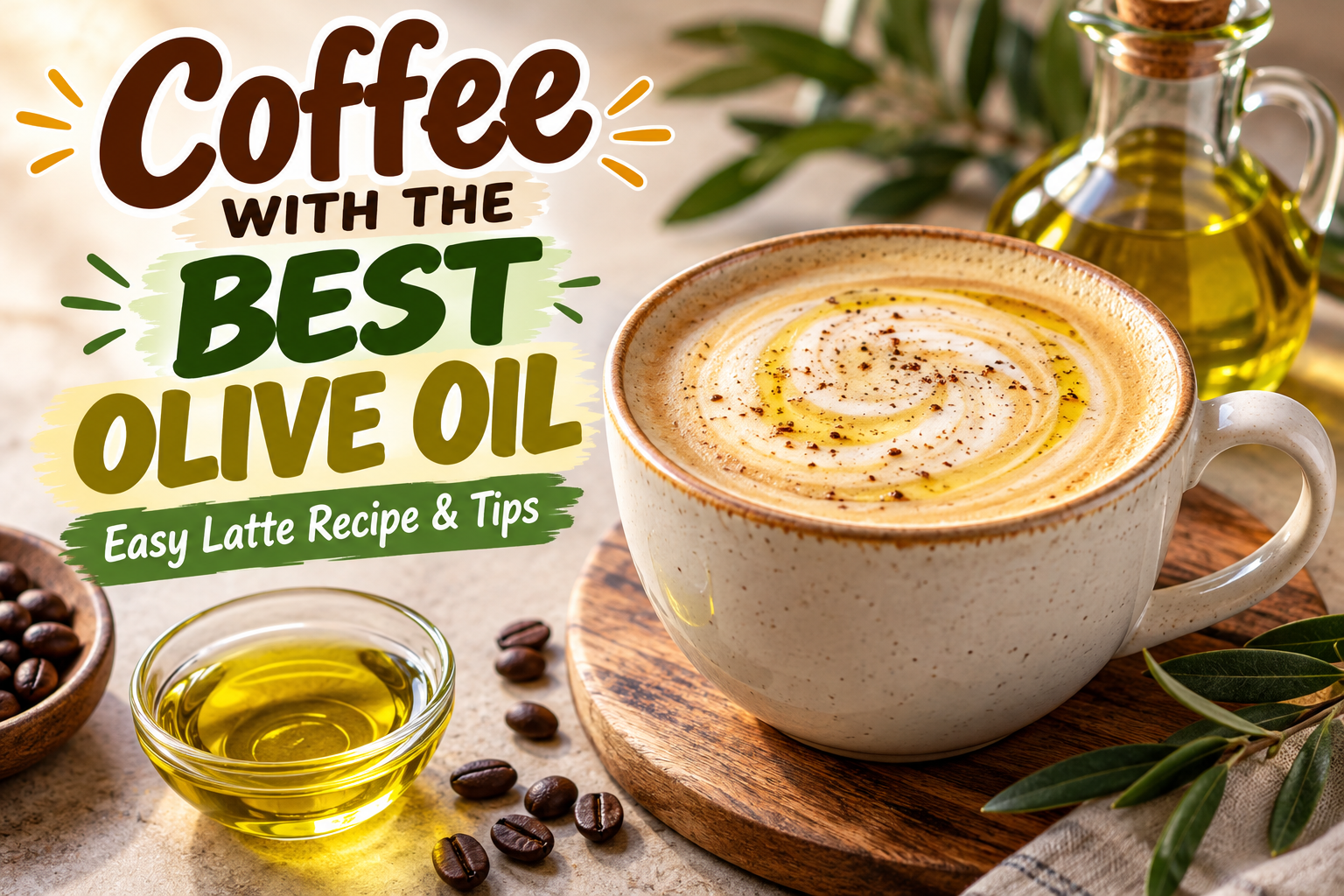
Want to try coffee with the best olive oil but aren’t sure which type to buy or how much to use? Start with a fresh, mild extra virgin olive oil (EVOO). Just 1 teaspoon blended into your coffee or milk can add a richer mouthfeel without overwhelming the coffee’s natural flavor.
The secret is choosing an olive oil that complements your coffee and mixing it properly. Pouring oil directly into a cup often leaves an unpleasant layer floating on top.
In this guide, you’ll learn how to select the right olive oil, make a creamy olive oil latte at home, adjust the flavor, and avoid common mistakes.
What Is Olive Oil Coffee?
Olive oil coffee is a drink made by combining brewed coffee or espresso with a small amount of olive oil, usually extra virgin olive oil.
When properly blended, tiny droplets of oil spread throughout the drink, giving it a fuller, smoother texture. Depending on the oil, you might notice gentle fruity, nutty, grassy, or peppery flavors.
The combination became widely known when Starbucks introduced its Oleato coffee drinks in 2023. Its range included espresso, oat milk, and Partanna extra virgin olive oil.
You don’t need specialized coffee equipment or an expensive olive oil to make something similar at home. A milk frother, fresh ingredients, and the right proportions are enough to get started.
Which Olive Oil Is Best for Coffee?
The best olive oil for coffee is a fresh, mild-to-medium extra virgin olive oil with a balanced, fruity flavor.
You want an oil that adds richness without making your espresso taste overly grassy, bitter, or peppery.
1. Choose Extra Virgin Olive Oil
Extra virgin olive oil is a good choice because it retains the natural flavor and aroma of olives.
Look for these qualities when shopping:
UC Davis recommends checking harvest dates, protective packaging, and freshness rather than assuming expensive olive oil is automatically better.
2. Match Olive Oil Flavor With Your Coffee
Not every EVOO tastes the same. Some are delicate and fruity, while others have a strong, peppery finish.
| Olive Oil Profile | Coffee Pairing | What to Expect |
|---|---|---|
| Mild and buttery | Medium-roast espresso, oat milk latte | Gentle, creamy character |
| Fruity and balanced | Medium or light-medium roast | More noticeable olive flavor |
| Bold and peppery | Strong espresso or dark roast | A sharper, more intense finish |
These are suggested flavor pairings, not fixed rules.
For your first olive oil latte, choose a mild EVOO. Once you know how the combination tastes, experiment with stronger oils.
3. Is Italian Olive Oil Better for Coffee?
Italian extra virgin olive oil can work beautifully in espresso, especially if you enjoy fruity or nutty flavors.
However, excellent olive oil also comes from Spain, Greece, California, and other growing regions.
Freshness and flavor matter more than country of origin.
There’s no need to buy an expensive imported bottle just for coffee. If you already have a fresh EVOO in your kitchen, taste a small amount first. If you enjoy its flavor, try it in a latte.
How to Make Olive Oil Coffee at Home
You can make a smooth olive oil latte using espresso, milk, and a little extra virgin olive oil.
The suggested recipe below uses one teaspoon of EVOO, making it an approachable starting point for beginners.
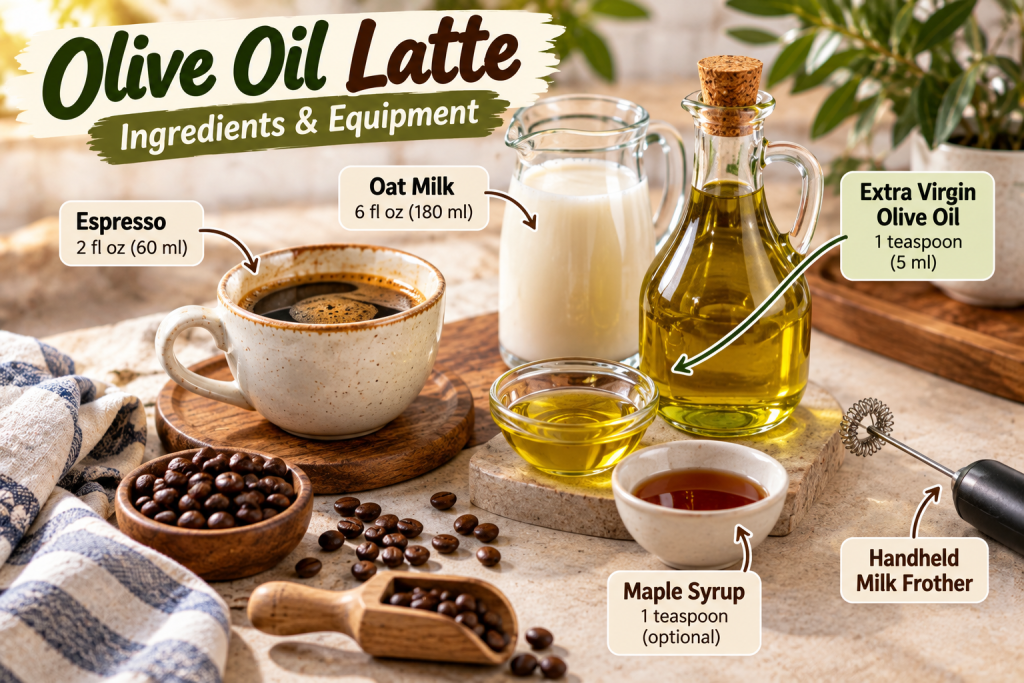
Ingredients and equipment needed to make a creamy olive oil latte at home
Easy Olive Oil Latte Recipe
Preparation Time: 5 minutes
Servings: 1
Drink Size: About 8 oz
Difficulty: Beginner-friendly
Ingredients
Equipment
Step-by-Step Instructions
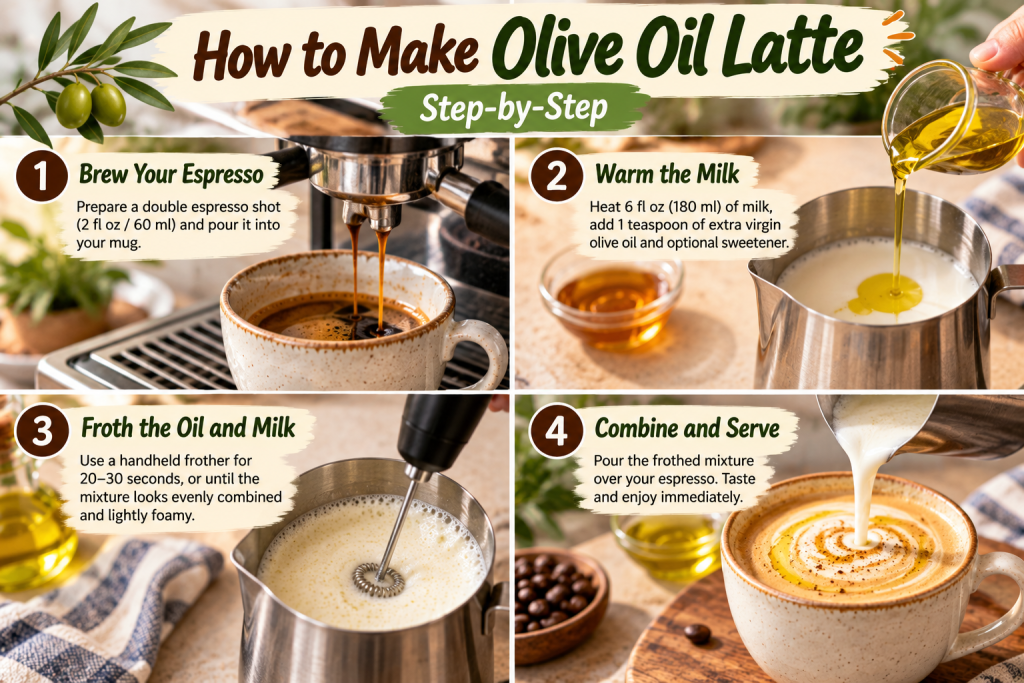
Learn how to make a creamy olive oil latte at home in four easy steps
Step 1: Brew Your Espresso
Prepare a double espresso shot, about 2 fl oz (60 ml), and pour it into your mug. If you don’t have an espresso machine, use a small serving of strong moka pot coffee.
For more information about espresso strength and caffeine levels, read our guide on espresso shot caffeine amount.
Step 2: Warm the Milk
Heat the milk gently until hot but not boiling. Add 1 teaspoon of EVOO and your optional sweetener.
Step 3: Froth the Oil and Milk
Use a handheld frother for about 20–30 seconds, or until the mixture looks evenly combined and lightly foamy. Avoid splashing hot milk.
Step 4: Combine and Serve
Pour the frothed mixture over your espresso. Taste before adding extra oil or sweetener. Enjoy immediately, before the oil has time to separate.
Helpful Tip: If you want a gentler olive oil flavor, begin with ½ teaspoon instead of a full teaspoon.
How Much Olive Oil Should You Put in Coffee?
Start with ½ to 1 teaspoon per 8-ounce drink. This lets you assess the flavor and texture without making your coffee too oily.
| Olive Oil Amount | Suggested Use |
|---|---|
| ½ teaspoon (2.5 ml) | Very mild introduction |
| 1 teaspoon (5 ml) | Good starting point for a latte |
| 2 teaspoons (10 ml) | Richer drink with more noticeable oil |
| 1 tablespoon (15 ml) | Strong, oil-forward version that may overwhelm some drinks |
These amounts are serving suggestions rather than universal rules.
One teaspoon of olive oil adds approximately 40 calories, so a tablespoon adds roughly 120 calories before milk or sweeteners.
Adding more oil doesn’t necessarily make the drink taste better. Often, a smaller amount produces a more pleasant balance.
Iced Olive Oil Coffee and Other Variations
You don’t have to drink olive oil coffee hot. There are several simple ways to prepare it.
Iced Olive Oil Cold Brew
For a refreshing cold version, use coffee that has already been chilled.
Ingredients:
Combine the cold brew concentrate and water in a glass with ice. Froth the chilled oat milk and olive oil together, then pour the mixture over the coffee.
For a sweeter version, add a small amount of vanilla syrup.
If you prefer preparing your coffee from scratch, follow our guide on how to make cold brew concentrate before combining it with olive oil and milk.
Black Coffee With Olive Oil
If you prefer coffee without milk, try adding ½ teaspoon of extra virgin olive oil to 8 fl oz (240 ml) of freshly brewed coffee.
Use an immersion frother to blend the ingredients in a tall, heat-safe container. The oil may separate again as the coffee sits, so drink it promptly.
Do not shake very hot coffee in a sealed container or blend it in a regular sealed blender jar. Pressure and splashing can cause burns.
Cinnamon or Vanilla Olive Oil Latte
For a softer, dessert-like flavor, try one of these adjustments:
These flavors can complement a mild EVOO without hiding the taste of your coffee.
Common Olive Oil Coffee Mistakes and How to Fix Them
Getting the balance right is easier when you understand why olive oil behaves differently from ordinary coffee ingredients.
| Problem | Likely Cause | Simple Fix |
|---|---|---|
| Oil floats on top | Ingredients weren’t blended well | Froth oil with milk before combining |
| Coffee tastes too oily | Too much olive oil | Reduce to ½ teaspoon |
| Strong peppery aftertaste | Bold olive oil flavor | Choose a milder EVOO |
| Drink tastes watery | Coffee too weak or too much milk | Use espresso or stronger coffee |
| Foam separates quickly | Emulsion is temporary | Froth thoroughly and serve immediately |
| Coffee tastes stale | Old or poorly stored oil | Use fresh EVOO and keep it away from heat and light |
Why Does Olive Oil Separate From Coffee?
Coffee is mostly water, while olive oil is fat. These liquids don’t naturally stay mixed.
Frothing breaks the oil into small droplets that become temporarily dispersed throughout the drink. This process is called emulsification.
Milk can help create a more consistent texture, but separation may still happen after the drink sits for a while. That’s normal.
The North American Olive Oil Association also recommends blending olive oil into coffee rather than relying on simple stirring.
Are There Benefits to Putting Olive Oil in Coffee?
Olive oil contains mostly monounsaturated fat, a type of unsaturated fat. The American Heart Association recommends replacing sources of saturated fat with unsaturated fats as part of a heart-healthy eating pattern.
However, adding olive oil to coffee is different from replacing butter or another source of saturated fat in your diet.
Some practical points to consider:
There is no good evidence that mixing olive oil into coffee specifically causes weight loss, detoxifies your body, or provides unique medical benefits beyond those of the ingredients themselves.
Think of olive oil coffee as a flavor and texture variation, not a necessary health supplement.
Frequently Asked Questions
Q01. Can I Use Regular Olive Oil Instead of Extra Virgin Olive Oil?
Yes. Regular refined olive oil can create a creamy texture when blended, but it generally has less pronounced olive flavor. Fresh, mild EVOO is a better starting point if you want some natural fruity flavor.
Q02. Does Olive Oil Make Coffee Less Bitter?
Olive oil can make coffee’s bitterness feel less prominent by changing its mouthfeel. It doesn’t remove the bitter compounds. Too much strongly flavored olive oil can actually introduce additional bitterness.
Q03. Can You Put Olive Oil in Cold Coffee?
Yes. Blend olive oil with cold milk or froth it into cold foam before adding it to iced coffee. Simply pouring oil into a cold drink is more likely to leave visible droplets on the surface.
Q04. Is Olive Oil Coffee Better Than Butter Coffee?
It depends on your preferences. Olive oil contains more unsaturated fat, while butter provides a distinctive dairy-rich flavor and contains more saturated fat. Both add calories, and neither is necessary for a healthy coffee routine.
If you’re interested in another coffee variation made with added fat, explore our guide to ghee in coffee to learn how clarified butter changes the drink’s flavor and texture.
Q05. Can I Use Olive Oil in Coffee Every Day?
You can include modest amounts of olive oil as part of your regular diet, but account for the extra calories and your individual digestive tolerance. You don’t need to add olive oil to coffee to benefit from using it in your meals.
Final Thoughts: Choosing the Best Olive Oil for Coffee
Making coffee with the best olive oil doesn’t require expensive ingredients or complicated equipment.
The most important steps are choosing a fresh, mild extra virgin olive oil, using a small amount, and blending it thoroughly.
For beginners, an 8-ounce latte with 1 teaspoon of EVOO is a practical place to start. You can adjust the amount, milk, and coffee strength until the combination suits your taste.
Whether you prefer hot espresso or an iced cold brew, careful ingredient selection and proper frothing will make a bigger difference than simply adding more oil.