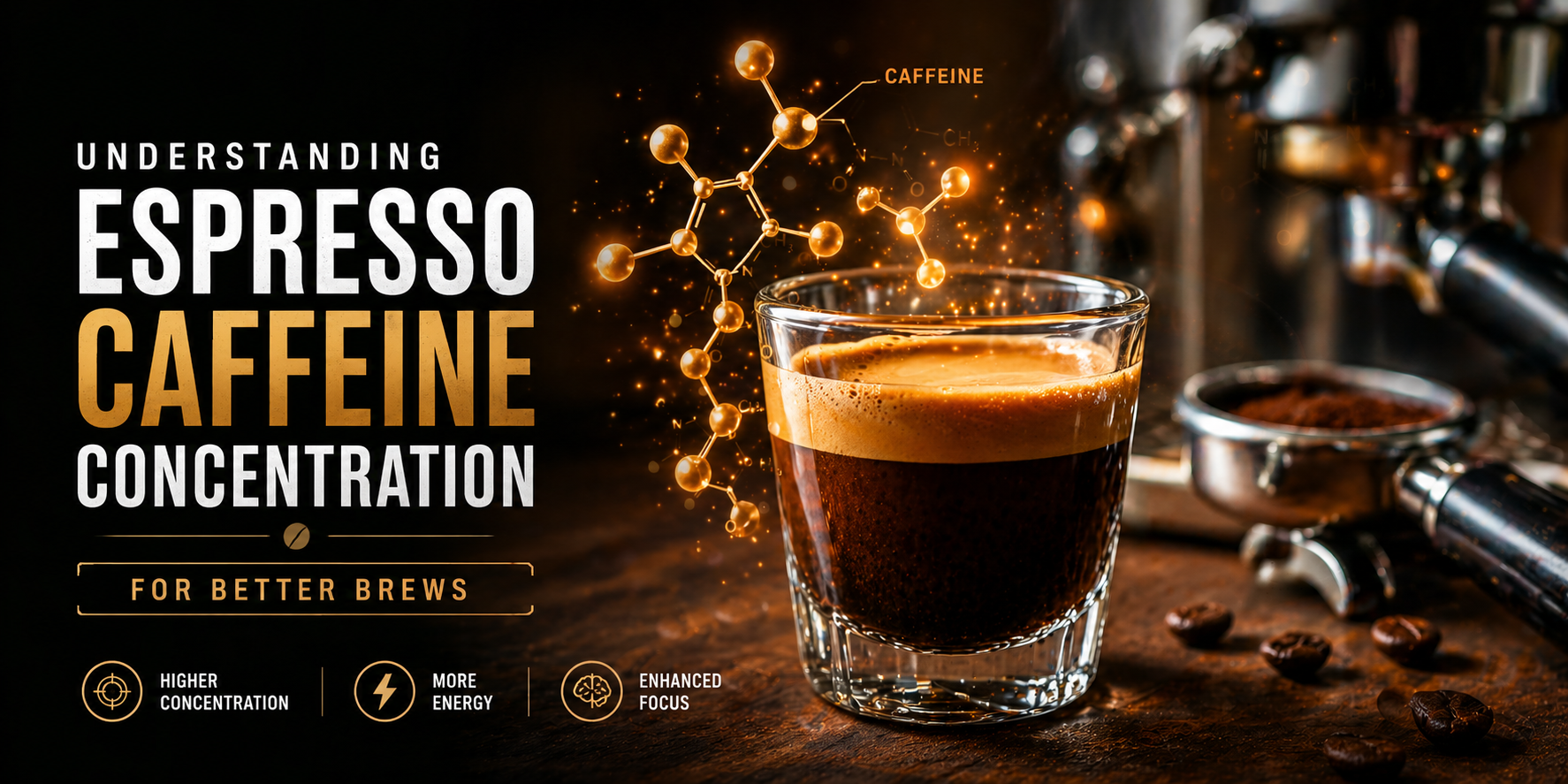
Espresso is more than a shot of coffee—it’s a tiny powerhouse of flavor and caffeine. If you’ve ever wondered how much caffeine in espresso or how to tweak your espresso caffeine concentration, this guide is for you. I’ll share friendly tips, simple formulas, and real stories so you can brew smarter and sip with confidence.
What Is Espresso Caffeine Concentration?
Espresso caffeine concentration measures the amount of caffeine per unit volume in your shot. Think of it as caffeine per ounce rather than per cup. A standard single shot is about one ounce and usually has around 63 mg of caffeine. That’s about 63 mg per ounce—far stronger than most brewed coffee. Understanding this helps you plan your caffeine intake and avoid mid-afternoon jitters.
Why It Matters to You
Maybe you’re a busy student pulling all-nighters, a café owner crafting a menu, or a health-conscious drinker tracking daily limits. Knowing your espresso caffeine per shot lets you adjust doses to match your tolerance and goals. You get energy when you need it and stay clear-headed when you don’t.
Factors Affecting Caffeine Levels in Espresso
Several factors shape your caffeine content in each shot. Here’s a quick look:
Bean Origin and Variety
|
Bean Type |
Caffeine per 1 oz Shot |
Flavor Profile |
|---|---|---|
|
Arabica |
~60 mg |
Smooth, nuanced |
|
Robusta |
~100 mg |
Bitter, bold, higher kick |
Arabica beans offer a mellow taste and moderate caffeine. Robusta packs a bolder punch if you need extra pep.
Roast Level Impact
Dark roasts taste stronger but can contain marginally less caffeine than lighter roasts.
How to Calculate Your Espresso’s Caffeine Content
Want precise numbers? Use this simple formula:
- Weigh Your Dose: Note grams of dry coffee grounds (e.g., 18 g).
- Estimate Caffeine per Gram: Roughly 12 mg per gram of coffee.
- Total Caffeine: Multiply grams × 12 mg (e.g., 18 g × 12 mg = 216 mg).
- Divide by Volume: If you pull a 2 oz double shot, divide 216 mg ÷ 2 oz = 108 mg per ounce.
This gives you espresso shot caffeine content in mg/oz. Tweak dose or volume to hit your target.
Real Customer Scenarios and Examples
Here are three friendly stories showing how different people use these numbers:
Matching caffeine levels in espresso to your routine makes each shot purposeful.
Cost Breakdown: Price per Milligram of Caffeine
Understanding cost per caffeine helps you budget. Here’s a quick comparison:
|
Beverage |
Price |
Caffeine (mg) |
Cost per mg |
|---|---|---|---|
|
Espresso (1 oz) |
$2.50 |
63 |
$0.040 |
|
Drip Coffee (8 oz) |
$3.00 |
95 |
$0.032 |
|
Energy Drink (12 oz) |
$3.50 |
160 |
$0.022 |
|
Tea (8 oz) |
$2.00 |
40 |
$0.050 |
Espresso costs more per mg but wins on convenience and taste intensity.
Caffeine Tolerance Checklist and Calculator
Figure out safe daily shots with this checklist:
Typically, aim for 2–4 espresso shots (126–252 mg) per day. Adjust based on your caffeine tolerance and lifestyle.
Timeline of Espresso Caffeine Effects
Knowing when caffeine kicks in helps you plan:
If you have evening plans, skip espresso after mid-afternoon to sleep well.
Alternative Options Comparison
Want lower caffeine or a different taste? Compare these:
|
Option |
Caffeine (mg/oz) |
Notes |
|---|---|---|
|
Double Espresso |
63 |
Standard serving |
|
Decaf Espresso |
2–5 |
Under 5 mg, great at night |
|
Cold Brew |
30 |
Smooth, less acidic |
|
French Press |
12 |
Milder per sip, more volume |
Experiment to find your favorite espresso vs coffee caffeine concentration mix.
Expert Barista Tips for Managing Caffeine Intake
Here are some pro tips I’ve learned:
Small tweaks make a big difference in caffeine strength of espresso.
Common Mistakes to Avoid When Measuring Caffeine
Watch out for these slip-ups:
Fix these and you’ll get reliable caffeine counts every time.
FAQ: Espresso Caffeine Concentration
Q1. How much caffeine is in a single espresso shot?
About 63 mg per ounce, though beans and roast can tweak it.
Q2. Does a doppio espresso have twice the caffeine?
Yes—a double shot roughly doubles your total caffeine to ~126 mg.
Q3. How does water temperature affect caffeine extraction?
Hotter water (90–96 °C) pulls more caffeine. Cooler water yields less.
Q4. Can I reduce caffeine by adjusting grind size?
Absolutely—coarser grind means less surface area and lower extraction.
Q5. Is espresso stronger in caffeine than drip coffee?
Per ounce, yes. Espresso has ~63 mg/oz vs. drip’s ~12 mg/oz.
By grasping espresso caffeine concentration, you can tailor each shot to your day. Whether you’re a barista, café owner, or home brewer, these friendly tips and simple formulas help you brew smarter, sip safer, and enjoy every cup.