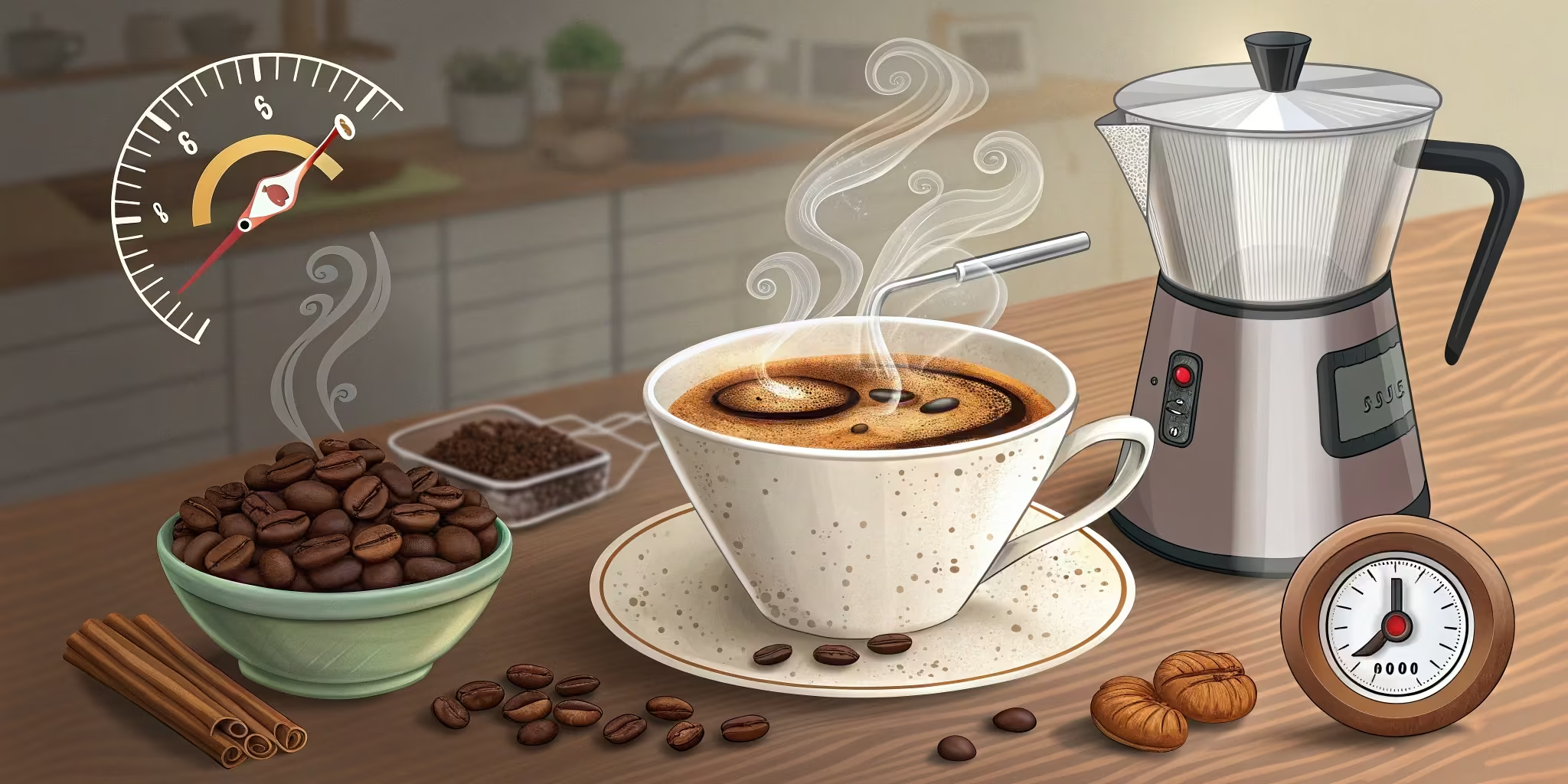
Coffee usually tastes burnt for one of two reasons. Either the beans were roasted very dark, or something went wrong while brewing: water that’s too hot, a grind that’s too fine, a brew that runs too long, or equipment that needs cleaning. The good news is that most burnt-tasting coffee is fixable at home.
This guide helps you work out which cause fits your cup. It lists the seven most common culprits, in the order worth checking, and gives a simple fix for each.
First, Is It Burnt, Bitter, or Sour?
People use “burnt” and “bitter” to mean different things, so start by naming what you taste. The right fix depends on it.
| What you taste | Likely meaning | Where to look first |
|---|---|---|
| Smoky, ashy, like charcoal | Very dark roast, or coffee left on heat | Beans, hot plate |
| Sharp, harsh, drying bitterness | Over-extraction | Grind, brew time, water temperature |
| Stale, rubbery, or “old oil” | Dirty equipment or old beans | Cleaning, bean freshness |
| Sour, thin, sharp acidity | Under-extraction (the opposite problem) | Grind finer, brew longer |
If your coffee is sour instead, you’re fixing the opposite problem, so don’t use the “too fine” advice below. Our guide to understanding coffee extraction explains how the two relate.
1. Your Beans Are Roasted Very Dark
Roasting is cooking. The longer beans roast, the more their natural sugars caramelize, and then they begin to char. Very dark roasts often taste smoky, bitter, and sometimes ashy, even when you brew them perfectly. Some have a shiny, oily surface. That’s a normal result of a deep roast, but it can be too much for some tastes.
How to fix it:
Not sure what the roast names mean? Read how coffee roast levels affect taste.
2. Your Water Is Too Hot
Hot water pulls flavor out of coffee quickly, and that includes the bitter compounds. A common brewing guideline is 195–205°F (90–96°C). Water straight from a rolling boil is about 212°F at sea level, which is hotter than you need.
How to fix it:
This matters most for pour-over and French press, where you control the water yourself. Learn more in our guide to the perfect temperature for coffee.
3. Your Grind Is Too Fine
Finer grounds expose more surface area, so water extracts flavor faster. If the grind is too fine for your method, the coffee over-extracts and turns harsh and bitter. Many people describe this as “burnt.”
Typical starting points:
| Method | Grind to try |
|---|---|
| French press | Coarse, like coarse sea salt |
| Pour-over, drip | Medium, like table salt to sand |
| Espresso | Fine, but adjusted to the shot time |
| Cold brew | Coarse |
How to fix it: Go one step coarser on your grinder and taste again. Change one thing at a time so you know what helped. Our coffee grind size guide covers the settings in more detail.
An uneven grind causes trouble too. A blade grinder makes both dust and chunks. The dust over-extracts (bitter) while the chunks under-extract (sour), so you get a muddled, harsh cup. A burr grinder is more consistent.
4. You’re Brewing for Too Long
Even with the right grind, contact time matters. The longer water touches the coffee, the more bitterness ends up in the cup.
Rough guidelines, which you can adjust to taste:
How to fix it: Use a timer. If your coffee tastes burnt, shorten the brew by 20–30 seconds or grind slightly coarser.
Also check your ratio. Too little water for the amount of coffee can taste intense and bitter. A good starting point is roughly 1 part coffee to 15–17 parts water by weight, which is about 2 tablespoons of ground coffee per 6 ounces of water. Adjust from there. For help, see finding your ideal coffee-to-water ratio.
5. Your Equipment Is Dirty
Coffee leaves oils and fine residue behind. Over time, those oils go rancid and add a stale, acrid, “burnt” flavor to every cup. This is one of the most overlooked causes, and it can make even fresh, well-brewed coffee taste bad.
Check these parts first:
How to fix it:
6. The Coffee Sits on a Hot Plate
Coffee left on a warming plate keeps cooking. After 20–30 minutes it can pick up a bitter, scorched flavor, even if it tasted fine when it was fresh.
How to fix it:
7. Your Beans Are Old or Poorly Stored
Stale beans don’t taste burnt in the same way as over-roasted ones, but they lose their sweetness and aroma. What’s left tastes flat and bitter, and it can read as “burnt” because nothing balances it. Beans stored in light, heat, or open air go stale faster. Pre-ground coffee goes stale faster than whole beans.
How to fix it:
If you have a bag you don’t want to waste, see what to do with stale coffee beans.
Quick Troubleshooting Checklist
Work through these in order and change only one thing per brew:
- Check the roast level on the bag. If it’s very dark, try a medium roast.
- Cool your water for 30–60 seconds after boiling.
- Grind one step coarser.
- Shorten your brew time slightly.
- Clean your coffee maker, grinder, and filter basket.
- Move brewed coffee to an insulated carafe.
- Use fresher beans and store them properly.
If the coffee still tastes burnt after you’ve tried these, switch to a different brand or roaster. Some beans are simply roasted to a profile you won’t enjoy.
FAQ
Why does my coffee taste burnt even though it’s fresh? The most likely causes are a very dark roast, water that’s too hot, or a dirty machine. Check the roast level first, then clean your equipment.
Does dark roast always taste burnt? No. Dark roasts taste smoky, bold, and low in acidity, and many people like that. A well-made dark roast shouldn’t taste ashy, though, so if yours does, try a medium-dark roast or brew it cooler.
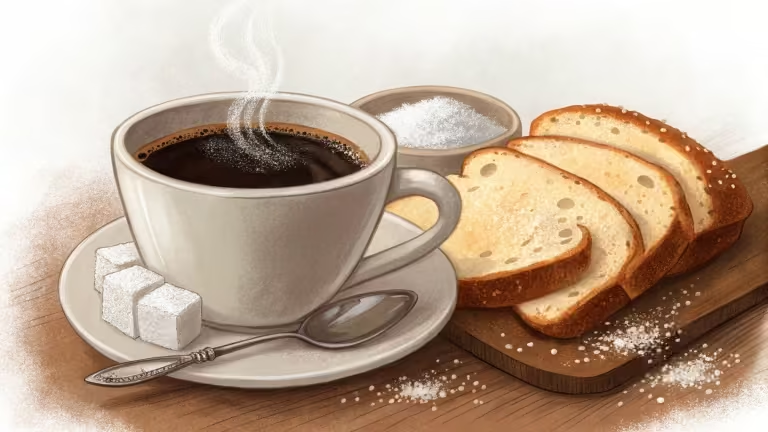
Can I fix burnt-tasting coffee after it’s brewed? You can soften it a little. Adding milk or cream, a pinch of sugar, or diluting with hot water can help. The better fix is to change the brewing variable that caused it.
Why does my espresso taste burnt? Common causes include a grind that’s too fine, a shot that runs too long, water that’s too hot, or a dirty group head. Dial the grind coarser, aim for a shorter shot time, and clean the machine.
Does a Keurig or drip machine make coffee taste burnt? It can, usually because of buildup inside the machine or a hot plate that keeps cooking the coffee. Descaling, regular cleaning, and moving the coffee to a thermal carafe usually help.