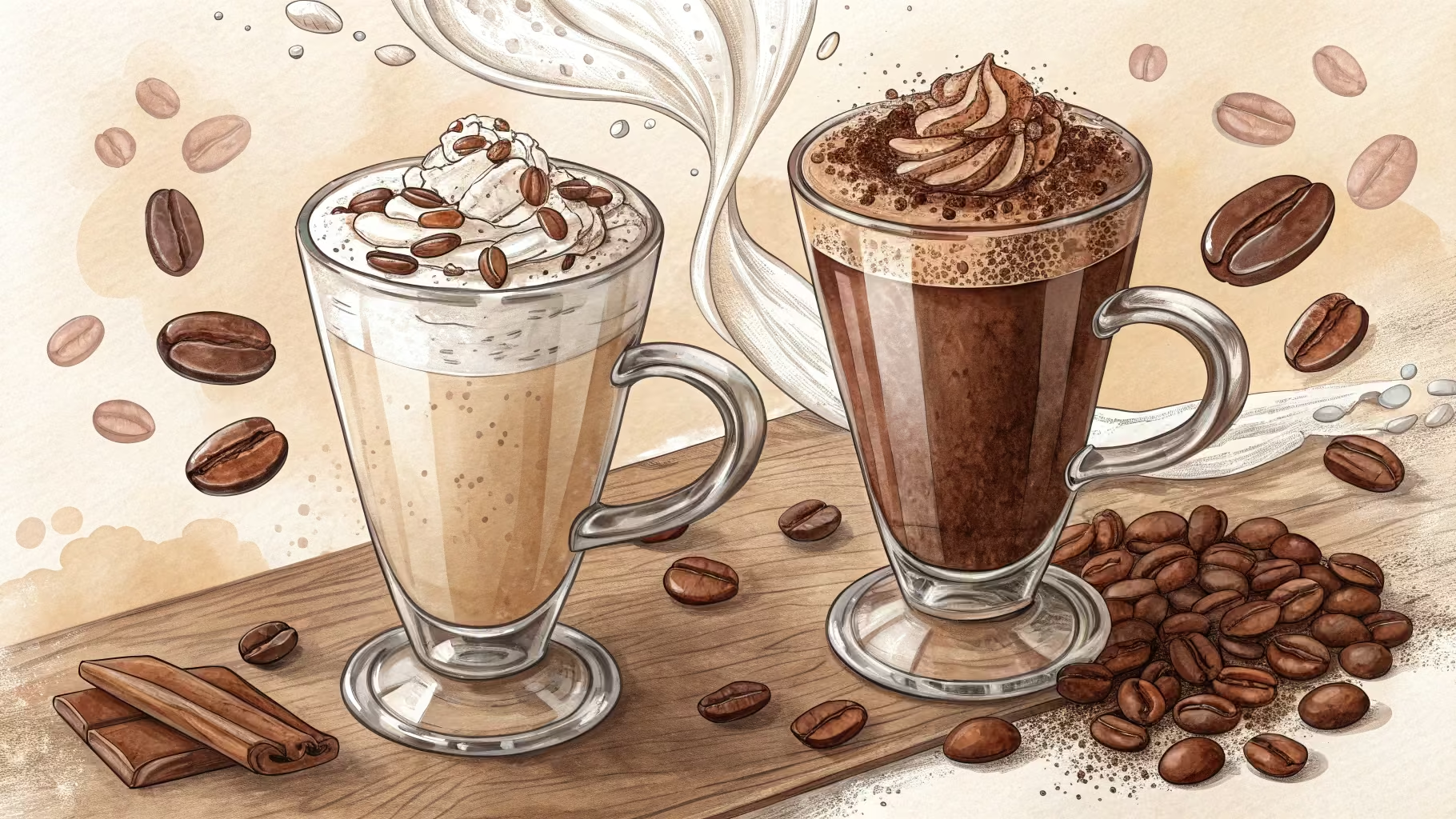
The main difference between a mocha and a latte is chocolate. A latte is espresso with steamed milk and a thin layer of foam. A mocha is that same drink with chocolate sauce or cocoa mixed in, and it often comes with whipped cream.
That one ingredient changes the taste, the calories, and, slightly, the caffeine. A latte tastes like smooth, milky coffee. A mocha tastes like a chocolate drink with coffee in it. Below, you’ll see how the two compare, what to expect at a coffee shop, and how to make either one at home.
Mocha vs Latte at a Glance
Both drinks start with espresso and steamed milk. The table shows where they split.
| Feature | Latte | Mocha |
|---|---|---|
| Base | Espresso + steamed milk | Espresso + steamed milk + chocolate |
| Flavor | Mild, creamy, coffee-forward | Sweet, chocolatey, dessert-like |
| Texture | Smooth, light foam | Rich and thick, often topped with whipped cream |
| Typical sweetness | Low unless syrup is added | Medium to high |
| Calories | Lower | Higher |
| Caffeine | Slightly lower | Slightly higher at many chains |
| Best for | Tasting the coffee | Wanting a treat |
What Is a Latte?
“Latte” is short for caffè latte, which means “milk coffee” in Italian. A cup usually has one or two shots of espresso, a lot of steamed milk, and a thin cap of foam. The milk is the biggest part of the drink, so it softens the espresso’s bitterness without hiding it.
Because a plain latte is not sweet, it is easy to change. Add vanilla, caramel, or brown sugar syrup and it becomes a flavored latte. Without added sweetener, the coffee flavor stays front and center.
What Is a Mocha?
A mocha (also called a caffè mocha or mochaccino) is a latte with chocolate added. Shops usually stir in chocolate sauce, cocoa powder, or chocolate syrup before the milk goes in. Many top it with whipped cream, which adds more richness and calories.
The result is balanced between coffee and chocolate. Dark chocolate gives a more bitter, grown-up flavor. Milk chocolate or a sweet sauce makes it taste closer to hot chocolate.
Taste and Texture: Which Is Stronger?
If “strong” means coffee flavor, the latte wins. The chocolate in a mocha covers some of the espresso’s bitterness, so it tastes milder and sweeter even when it has the same shots.
Texture differs too. A latte is light and silky. A mocha feels heavier because of the chocolate and any cream on top. If you want to taste the espresso, order a latte. If you want a drink that feels like dessert, order a mocha.
Caffeine: Mocha vs Latte
Caffeine is close, but the mocha often edges ahead. Espresso supplies most of the caffeine in both drinks, and chocolate adds a small extra amount.
Here are published Starbucks figures for a 16 oz grande. A grande Caffè Mocha is listed at 175 mg of caffeine, against 150 mg for a grande Caffè Latte. Treat these as reference points, since chains can change recipes.
Café-to-café differences matter more than the drink name. The number of espresso shots, the cup size, and the beans all shift the total. A latte with an extra shot will beat a standard mocha.
For context, the FDA says most healthy adults can have up to about 400 mg of caffeine a day. At roughly 150–175 mg a drink, that is about two grande-size drinks. Caffeine sensitivity varies, so adjust to how you feel. If you want less, ask for decaf espresso or one shot instead of two. For more on timing and limits, see our guide on how long caffeine lasts.
Calories and Sugar: Which Is Lighter?
A latte is the lighter pick. Chocolate sauce, extra sugar, and whipped cream all add calories to a mocha.
One widely shared comparison lists a 16 oz Starbucks latte at 190 calories and a mocha of the same size at 370 calories. The mocha figure includes whipped cream. Without it, the gap is smaller. Another source puts the whipped cream topping at about 80 calories and 7 grams of fat on those chain drinks.
Calories depend heavily on the milk, the chocolate, and the toppings. Treat any single number as an estimate, and check the nutrition information at your café.
Easy ways to lighten a mocha
Mocha vs Latte vs Other Espresso Drinks
If you’re still deciding, it helps to see where these two sit on the menu.
Which Should You Order?
Choose based on what you want from the cup.
Order a latte if you:
Order a mocha if you:
How to Make Each at Home
You don’t need a café machine. These are suggested starting points, not tested recipes, so adjust to your taste. Any strong coffee works if you lack an espresso machine: use a moka pot, an AeroPress, or instant espresso powder. Our guide to a latte with instant coffee shows the shortcut.
Basic latte (1 serving)
- Make 2 shots of espresso (about 2 oz) or ½ cup of very strong coffee.
- Heat 6–8 oz (¾–1 cup) of milk until steaming, around 150–160°F. Don’t let it boil.
- Froth the milk with a frother, whisk, or jar.
- Pour the coffee into a mug, add the milk, and top with a spoonful of foam.
Basic mocha (1 serving)
- Stir 1–2 tablespoons of chocolate sauce (or 1 tablespoon cocoa plus 1 tablespoon sugar) into the hot coffee until smooth.
- Heat and froth 6 oz (¾ cup) of milk.
- Pour the milk in slowly.
- Add whipped cream if you want it.
Tip: Mix the cocoa into the hot coffee first, not the milk. Cocoa powder clumps in cold or lukewarm liquid. Tasting before you add sweetener keeps it from getting too sugary.
For a seasonal twist, try our homemade peppermint mocha.
Common Mistakes
FAQ
Is a mocha stronger than a latte? Not in coffee flavor. A mocha can have slightly more caffeine at some chains, but the chocolate makes it taste milder.
Does a mocha have more caffeine than a latte? Often a little more, because chocolate adds a small amount. Shot count and cup size matter more than the drink name.
Is a mocha just hot chocolate with coffee? Roughly, yes. A mocha adds espresso to a chocolate-and-milk base, so it sits between hot chocolate and a latte.
Can I make a mocha with brewed coffee? Yes. Use a strong brew, such as moka pot coffee, so the chocolate and milk don’t drown it out.
Which is better for iced drinks? Both work. A mocha is easier to over-sweeten when cold, so mix the chocolate into the warm coffee first, then pour over ice.